
Review · MARRAKECH
From Marrakech: 3-Day Desert Tour to Agadir
The best part of this three-day desert trip is how much Morocco you see between Marrakech and Agadir. You cross the High Atlas, walk through Ait Ben Haddou, pass rose valleys and palm-filled oases, then reach the Merzouga dunes for a camel ride, sunset, dinner, music, and a night under desert skies.
I like the steady mix of major sights and small local stops, especially Todra Gorge and the Dades Valley, which keep the journey from becoming one long road transfer. I also like the care shown by guides such as Ayoub, Imad, Hakim, and Walid. The trade-off is clear: this is a lot of Morocco in three days, so expect long hours in the van, especially on the final run to Agadir.
Key points to know before booking
- Sunset by camel in Erg Chebbi: Ride one camel per person into the Merzouga dunes, with sandboarding included.
- Ait Ben Haddou and film country: Visit the UNESCO-listed kasbah and pass places linked with films and television productions.
- Two different overnight stays: Sleep in the Dades Valley on night one, then camp in the Sahara on night two.
- Long but varied driving: The route covers a huge stretch of southern Morocco, with frequent stops for views, food, photos, and local visits.
- Guides make a real difference: Drivers and guides including Ayoub, Imad, Hakim, Youssef, and Walid are praised for humor, safety, flexibility, and practical help.
- Bring money and warm layers: Lunches and entrance fees are extra, and desert nights can be surprisingly cold.
From Marrakech into the High Atlas
Your first morning begins with pickup at your Marrakech accommodation, or at the nearest point a vehicle can reach if your riad sits in a narrow medina lane. The road climbs toward the High Atlas and the Tizi n’Tichka pass, where the scenery changes quickly from city streets to mountain slopes and Berber villages.
This opening section is more than a transfer. You get broad views across winding mountain roads and chances to stop for photographs. The exact rhythm depends on traffic, weather, and the group, but the route is broken into several visits rather than one uninterrupted drive.
The mountain crossing can be tiring if you suffer from motion sickness or back problems. Roads twist, and the full trip involves many hours seated in a vehicle. I would take this seriously when deciding if the tour fits you.
The vehicle is air-conditioned, though one guest found the cooling in the van weaker than expected. Bring water, sunglasses, and a light layer for the morning. The weather can change sharply between Marrakech, the mountains, and the desert.
More Multi-Day Desert Tours in Marrakech
- From Marrakech: 3-Day Merzouga and Sahara Desert Tour
★ 4.9 · 15,308 reviews - From Marrakech: Merzouga 3-Day Desert Safari with Food
★ 4.7 · 12,232 reviews - Marrakech: 3-Day Merzouga Desert Experience Camel & Meals
★ 4.6 · 6,252 reviews
Ait Ben Haddou, Morocco’s great earthen village
Ait Ben Haddou is the first major historic stop and one of the tour’s strongest points. This fortified earthen settlement rises above the surrounding country in a cluster of towers, walls, and narrow passages. Its distinctive appearance has made it a favorite filming site, including for productions associated with Gladiator and Game of Thrones.
You normally explore with a local guide, who explains the buildings and the settlement’s role in the region. Allow yourself time to look beyond the main photo stops. The value here is not just the famous view. The passageways show how architecture, trade, defense, and desert climate worked together.
An entrance fee or local guiding cost may be payable separately. One traveler specifically noted a small guide charge at Ait Ben Haddou, so carry cash in Moroccan dirhams or another accepted currency. Entrance costs are not included in the tour arrangements.
The visit can feel busy because Ait Ben Haddou is one of southern Morocco’s best-known sights. Still, it is a worthwhile stop, particularly if you enjoy old architecture or film locations.
Ouarzazate and the road through Skoura
From Ait Ben Haddou, the route continues to Ouarzazate, often called the gateway to the desert. You visit Taourirt Kasbah, an imposing complex with decorated rooms, courtyards, and earth-colored walls. The stop adds useful context after Ait Ben Haddou because you see another form of kasbah architecture rather than repeating the same visit.
Ouarzazate is also tied closely to Morocco’s film industry. The town and nearby studios have provided settings for major productions, and the wider route offers several chances to recognize familiar scenery. Film fans will get more from this section than someone interested only in beaches or city shopping.
After Ouarzazate, the road passes through Skoura and the Valley of Roses. The scenery becomes more open, with kasbahs, cultivated areas, and changing mountain views. Depending on the season, the rose-growing area can be especially appealing, but the route remains worthwhile outside the flowering period because of its villages and old buildings.
The first night is spent in the Dades Valley, usually around Dades Town or Boumalne Dades. Accommodation includes a bed, dinner, and breakfast. The standard stay is practical rather than a major hotel experience, while a premium option may be available for the desert camp.
Dades Canyon and the Todra Gorge
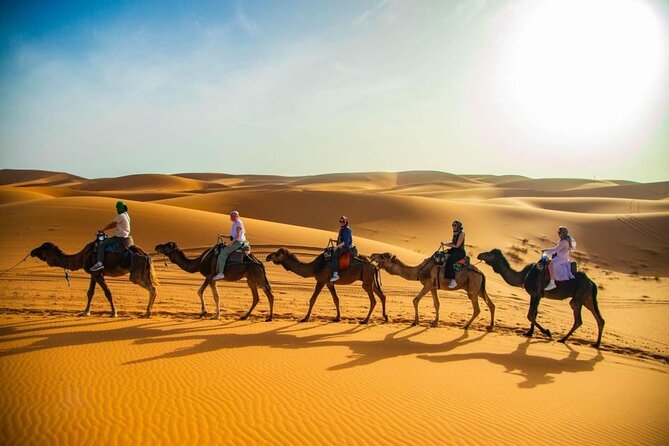
Day two brings some of the most dramatic scenery. The Dades Canyons cut through red and ocher rock, with winding roads, steep walls, and striking viewpoints. This is a good place to get out, stretch your legs, and take photographs after the first day’s long drive.
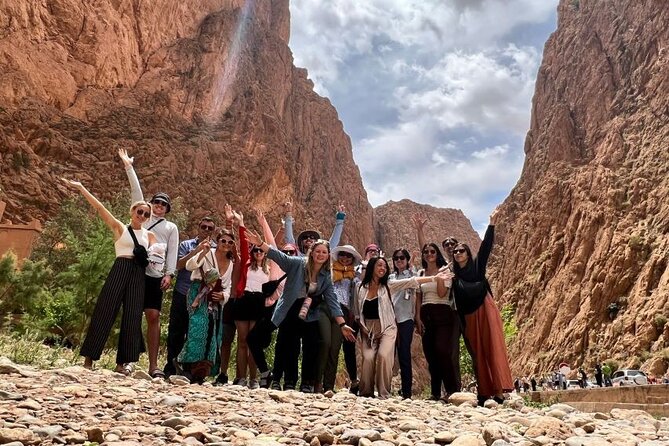
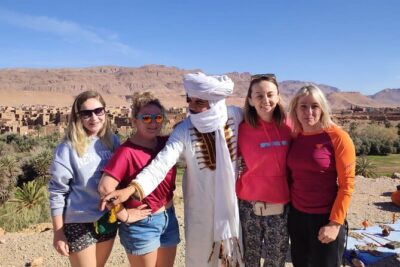
The route then reaches Todra Gorge near Tinghir. Here, tall rock walls rise on either side of the gorge, creating a cooler, narrower setting than the open desert. A local guide may show you around Tinghir and explain aspects of local Berber life. This is one of the more useful cultural stops because it connects the scenery with the people who live and work in the area.
You may also pass through a palm-lined oasis. The contrast is memorable: bare rock and dry ground give way to green palms and cultivated land. I appreciate this part of the tour because it shows that southern Morocco is not simply sand and stone. Water, farming, and settlement shape the route at every turn.
Some local visits can include stops at shops selling carpets, scarves, or local products. These are not always everyone’s favorite use of time. If shopping is not your priority, ask your guide how long the stop will last and use the opportunity for a drink or a short break.
More Multi-Day Desert Tours in Morocco
- Marrakech: Agafay Desert Magical Overnight with Dinner Show
★ 4.2 · 2,941 reviews - From Marrakech: Unforgettable 3-Day Desert Tour to Fes
★ 4.9 · 2,614 reviews - From Marrakech: 2-Day Sahara Tour to Zagora & Ait Ben Haddou
★ 4.4 · 1,925 reviews - From Marrakech: 3-Day Sahara Tour with Private tent & Meals
★ 4.8 · 1,652 reviews
Erfoud and the approach to Merzouga
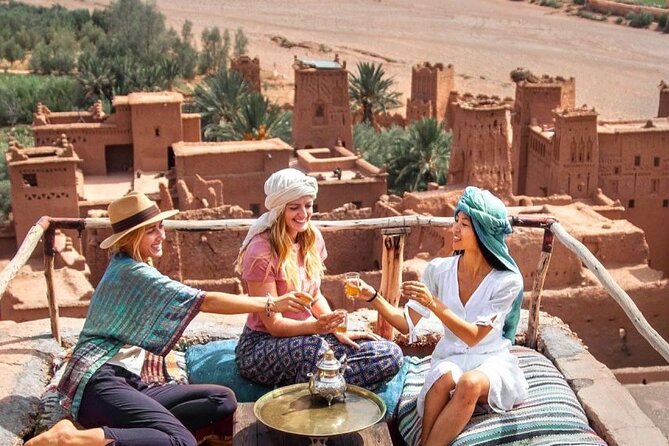
After Todra Gorge, the road continues through Erfoud toward Merzouga. This remains a long driving day, but the changing scenery helps. You move from gorge country through dry plains and smaller settlements toward the sand dunes.
The organized stops are one reason this tour works better than a simple point-to-point transfer. You can pause for snacks, drinks, photographs, and ATMs, and guides have helped people find sensible local prices for purchases. Even so, do not expect a slow, unhurried road trip. The route has a fixed destination each evening, and the desert camp cannot wait indefinitely.
Bring cash. Lunches are not included, and you will need money for food, drinks, optional purchases, and any entrance fees. The included breakfast and dinner reduce the daily cost, but you should still budget for several lunches and small expenses.
Camel riding into the Erg Chebbi dunes
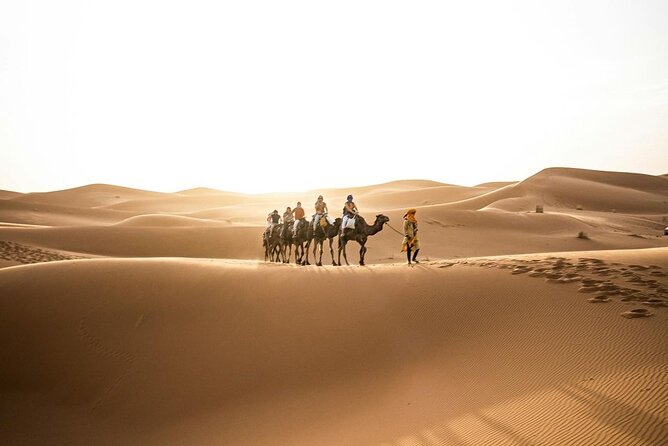
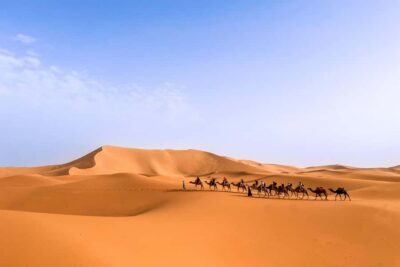
The arrival at Erg Chebbi is the emotional high point. You leave the vehicle and mount a camel, with one camel assigned per person. The ride takes you across the sand toward camp as the sun drops lower.
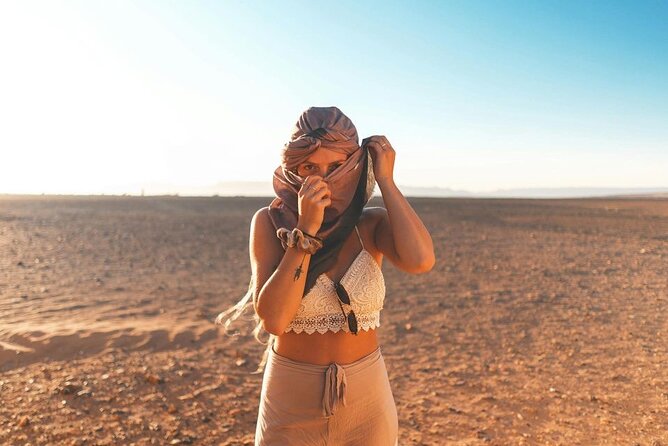
A camel ride is not a fast adventure. It is a slow, swaying way to watch the dunes change color and light. You will probably want a scarf, sunglasses, and a secure way to carry your phone. Walking on sand is harder than it looks, so comfortable footwear matters.
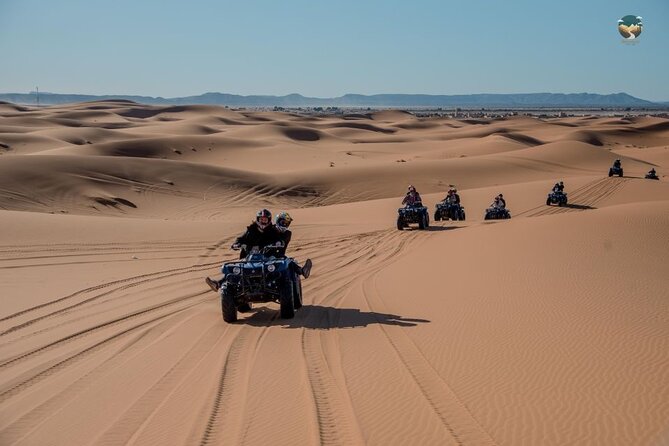
Sandboarding is included, and you can try it on the dunes. Some people also choose quad biking, though that is not listed among the included services. If you want a motorized ride, confirm the extra cost and arrangement before agreeing.
The camp includes dinner and breakfast. After dark, you can expect drumming and music around the camp area, along with the simple pleasure of sitting outside in the desert. The setting feels special, but do not confuse a tourist camp with a remote nomad settlement. The camp is designed for visitors and may feel more comfortable and organized than fully traditional.
A premium camp can add air conditioning and charging points, which matter greatly in hot weather. Standard camping may be enough if you mainly want the desert setting and do not need extra comforts. In winter, the more important issue is cold. Pack thermal clothing, gloves, thick socks, and a warm hat. Several people found the night colder than expected, even with blankets.
Sunrise and the long road to Agadir
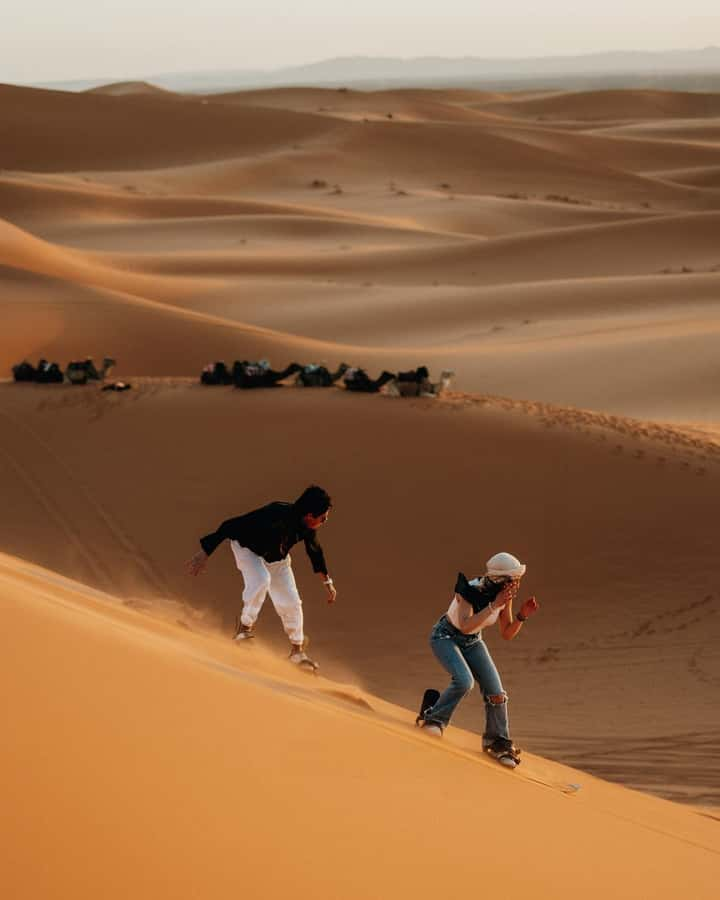
The next morning starts with sunrise over the dunes. This is worth setting an alarm for. The light spreads across the sand, and the cool early air makes the desert feel very different from the previous evening.
You return to the auberge or meeting point before continuing west. The route passes through the Draa Valley, where kasbahs and palms mark the course of the valley. You then continue through Taznakht and Taliouine before reaching Agadir.
This final day involves substantial driving. It is the part most likely to test your patience, especially after a late desert evening and an early sunrise. The reward is that you finish in Agadir instead of returning to Marrakech, making the tour useful if you are combining an inland route with time on the coast.
There is an important transfer detail. Upon reaching Ouarzazate, the group may be split, with transport to Agadir continuing by taxi. That arrangement can be perfectly practical, but it means the same vehicle and guide may not accompany you all the way to your final drop-off. Confirm the handover with your guide so you know who is responsible for the next section.
Drop-off is provided at your Agadir hotel or the closest accessible location. If your accommodation is on a narrow or restricted street, expect to walk the last short stretch with your luggage.
Guides, vehicles, and the value of the package
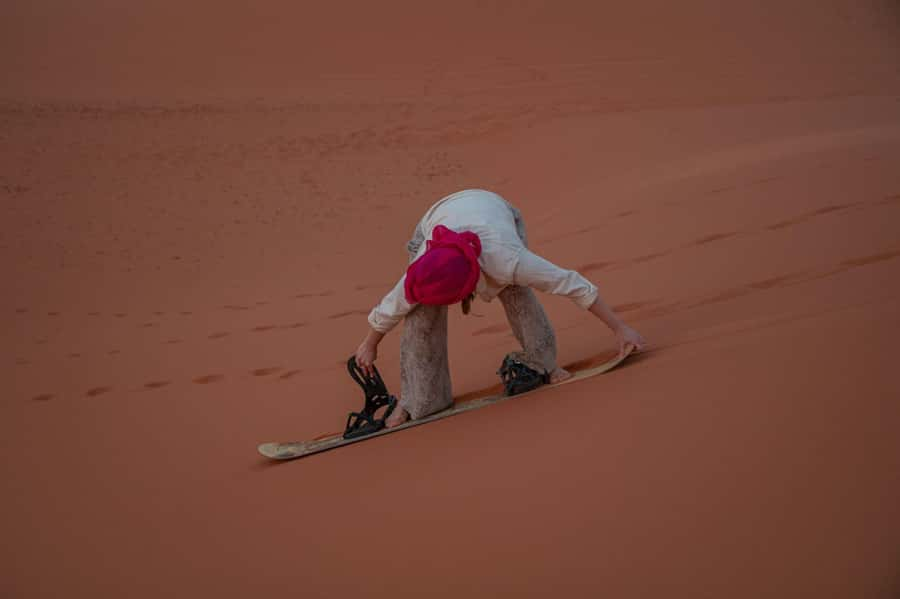
The guide can shape this experience as much as the scenery. The strongest reports center on drivers who explain what is happening, stop when needed, help with ATMs and snacks, and keep the mood light during long road sections.
Names praised for these qualities include Ayoub, Imad, Hakim, Walid, Youssef, Azzdin, Abderrahman, Abdul, and Hakeem. Assignments can change, so you cannot book a particular personality with certainty. What you should expect is an English, French, or Spanish-speaking guide-driver, with local guides joining at selected sights.
The air-conditioned vehicle is included, along with fuel, accommodation, dinners, breakfasts, camel trekking, and sandboarding. Taken together, that is solid value for a route covering this much ground. You are paying not only for the desert night, but also for the transport, route planning, local connections, and two nights of lodging.
The value is weaker if you dislike scheduled group travel, prefer long stays at each sight, or want to choose every restaurant yourself. Lunches and entry fees are extra, and shop stops may not appeal to everyone. Still, arranging the same route independently would require planning several transfers and desert services, so the package can make sense for a first visit.
Who should book this Morocco desert trip?
I would recommend it to a first-time visitor who wants to see the Sahara but has limited time. You get mountains, kasbahs, valleys, gorges, oases, dunes, and a coast-bound finish in three days.
It also suits solo travelers who want organized transport and a social setting. A solo guest described feeling safe and well cared for, while larger groups have also been accommodated. Families can enjoy camel riding and sandboarding, though parents should prepare children for the long vehicle sections.
I would hesitate if you have serious back problems, strong motion sickness, or very little tolerance for early starts and long transfers. This is an ambitious route, not a restful break.
Pack sunglasses, a sun hat, comfortable shoes, warm layers, and cash. Add gloves and thick socks for winter nights. A small day bag is useful for the desert, while larger luggage can remain with the vehicle where arrangements allow.
Should you book it?
Book this tour if you want the big southern Morocco highlights in one organized trip, and you accept that the route requires long drives. The camel ride, desert sunset, sunrise, Ait Ben Haddou, Todra Gorge, and Dades Canyon give you plenty of memorable stops.
Skip it if you want a slow desert stay or dislike group schedules. For most first-time visitors traveling from Marrakech toward Agadir, though, the combination of transport, meals, accommodation, and desert activities offers a practical way to cover a remarkable stretch of Morocco.
FAQ
Where does the tour start and finish?
It starts with pickup in Marrakech and finishes with drop-off at your Agadir hotel or the closest accessible location.
How long is the tour?
The experience lasts three days, with two overnight stays: one in the Dades Valley and one at a desert camp in Merzouga.
Is transport included?
Yes. Transport is provided in an air-conditioned vehicle, with fuel included for the trip.
Which languages can the guide speak?
The guide-driver may speak English, French, or Spanish.
Is the camel ride included?
Yes. Camel trekking in the Merzouga desert is included, with one camel per person.
Is sandboarding included?
Yes. Sandboarding in the dunes is included.
Are lunches included?
No. Lunches are not included, so bring cash for meals, drinks, and small purchases.
Should I bring warm clothing?
Yes. Desert evenings and nights can be cold, especially in winter. Bring warm layers, and consider gloves, thick socks, and a warm hat.
Is the tour suitable for people with back problems or motion sickness?
The tour may not suit you if you have back problems or motion sickness because it involves long hours of driving and winding mountain roads.
More Multi-Day Desert Tours in Marrakesh
- From Marrakech: 2-Days luxurious experience to Zagora Desert
★ 4.9 · 1,502 reviews - From Marrakech: 3-Day Sahara Desert Adventure to Fes
★ 4.5 · 1,405 reviews - From Marrakech: Zagora 2-Day Desert Safari with Food & Camp
★ 4.5 · 1,137 reviews - From Marrakech: 2-Day Desert Excursion
★ 4.5 · 900 reviews
New desert trips around Marrakesh
- Three valleys, Atlas Mountain, waterfalls & Agafay Desert★ 5.0 · 13 reviews
- Marrakech palm grove: Sunset camel ride★ 4.8 · 194 reviews
- Marrakech : Agafay Desert Sunset Camel Ride & Luxury Dinner★ 4.3 · 39 reviews
- Marrakech: Sunrise Desert Tour with Camel Ride and Breakfast★ 4.4 · 36 reviews
- From Marrakesh: Private 4-Day Sahara Desert Discovery Tour★ 4.9 · 63 reviews
- Romantic Dinner & Camel Ride In Agafay Desert★ 3.8 · 8 reviews
- Quad biking in Agafay Desert with lunch & Camel Ride & pool★ 4.5 · 186 reviews
- Quad bike and Lunch & Pool in Desert Marrakech Agafay★ 4.8 · 47 reviews
Marrakech Desert Safaris, compared.
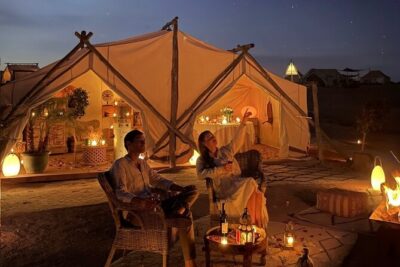
Agafay Desert Sunset, Camel Ride, and Dinner Show
Read our review →
Agafay Desert Quad & Camel Rides with Dinner Show
Read our review →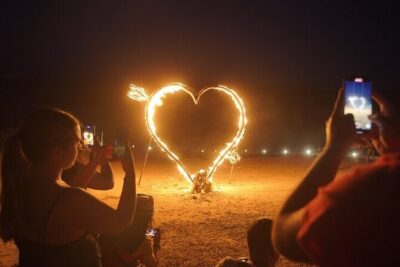
Agafay Desert Quad Biking Tour with Dinner-Show
Read our review →
3 Days Desert Tour From Marrakech To Merzouga Dunes & Camel Trek
Read our review →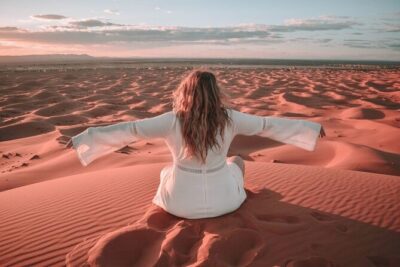
3-Day Marrakech to Merzouga Desert Tour: Camel Rides & Overnights
Read our review →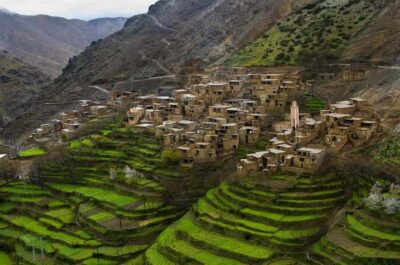
Desert & Mountain Tour with Camel Ride & Lunch
Read our review →Other lists this trip appears in