Review · MARRAKECH
Marrakech: 3-Day Merzouga Desert Experience Camel & Meals
The real prize here is the Sahara night: after a long road through the High Atlas, kasbah country, palm groves, and Todra Gorge, you ride a camel into Erg Chebbi as the sun drops behind the dunes. Dinner, drums, stars, and an early sunrise follow. This is Morocco by road, not by postcard.
I like the range packed into three days, especially Ait Ben Haddou and Todra Gorge, and the way the sunset and sunrise camel rides frame the desert stay. Guides and drivers such as Jamal, Laarbi, Mohammed, Aziz, and Mustapha have earned strong praise for safe driving, patience, and help with stops. The catch is simple: you spend a lot of time in a minibus, including roughly 10 hours on the return to Marrakech.
Key points to know before booking
- The desert camp is the main event: Ride camels at sunset, sleep near Erg Chebbi, hear Berber drums, and return after sunrise.
- A great deal of Morocco fits into three days: The route includes the High Atlas, Ait Ben Haddou, Ouarzazate, Valley of the Roses, Tinghir, Todra Gorge, Erfoud, and Merzouga.
- Expect long driving days: The scenery is rewarding, but this is not a relaxed stay in one place.
- The $113 price covers the costly basics: Transport, hotel, camp, breakfast, dinner, guides in Tinghir and Merzouga, camel trekking, and sandboarding are included.
- Bring cash for extras: Lunch, drinks, the Ait Ben Haddou guide, swimming, quad biking, and tips are not covered.
- Pack for opposite temperatures: Summer can be fiercely hot, while desert nights and early mornings can be cold.
What $113 buys you on the road to Merzouga
At $113 per person, this three-day trip offers unusually broad coverage for the price. Your transport, Marrakech pickup and drop-off, a private room at Hotel Bougafer or a similar four-star property, one desert night, breakfast, dinner, camel trekking, sandboarding, and local guides in Tinghir and Merzouga are included.
That matters because the route is long and the desert logistics are not simple. You are not merely paying for a camel ride. You are also paying for the vehicle, fuel, hotel, camp transfer, road planning, and a driver who handles the long return to Marrakech.
Still, keep your wallet handy. Lunch is excluded, and drinks can cost about €10 to €12 in the tour arrangements described. Lunch stops can be buffet-style and may run about €12 to €13 per person. A guide at Ait Ben Haddou costs about €3. Quad biking is optional, and swimming may cost about €5. Tips are also worth budgeting for.
I see this as a strong-value trip for someone who wants the major southern Morocco route without arranging several hotels and transfers alone. It is less appealing if you want quiet meals, flexible stops, or a great deal of time at each site.
More Camel Rides in Marrakech
- Marrakech: Agafay Desert Sunset, Camel Ride, and Dinner Show
★ 4.6 · 35,119 reviews - Marrakech: Agafay Desert Quad & Camel Rides with Dinner Show
★ 4.8 · 27,382 reviews - Marrakech: Agafay Desert Quad & Camel Rides with Dinner Show
★ 4.9 · 10,771 reviews
Day one: Tizi n’Tichka and the High Atlas
Pickup begins around 7:20 in the morning. If you stay in Gueliz, Hivernage, or another New City neighborhood, the minibus can collect you at your accommodation. In the Old Medina, narrow lanes usually mean walking to a nearby meeting point. The exact place and time are confirmed by WhatsApp or email the day before, so keep your phone active.
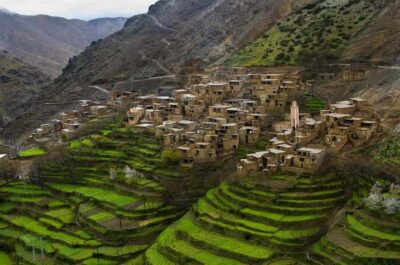
The first major road section crosses the Tizi n’Tichka pass in the High Atlas. You will stop for photographs and short breaks, and the views change quickly as the minibus climbs through winding valleys and high mountain terrain.
This is a good time to appreciate the tour’s scale. In one morning, you move from Marrakech’s urban streets into a very different part of Morocco. The road is scenic, but it is also twisty. If you have back trouble or get motion sick, take the warning seriously. Comfortable shoes, sunglasses, a sun hat, and long trousers are sensible choices.
The vehicle is air-conditioned and has space for luggage. Comfort can vary, though. Some departures have used minibuses that feel cramped on the long road, and one detailed account noted faulty seatbelts and an awkward metal bar between seat backs. I would check your seatbelt before leaving and avoid assuming every minibus will feel new.
Ait Ben Haddou, where clay architecture takes center stage
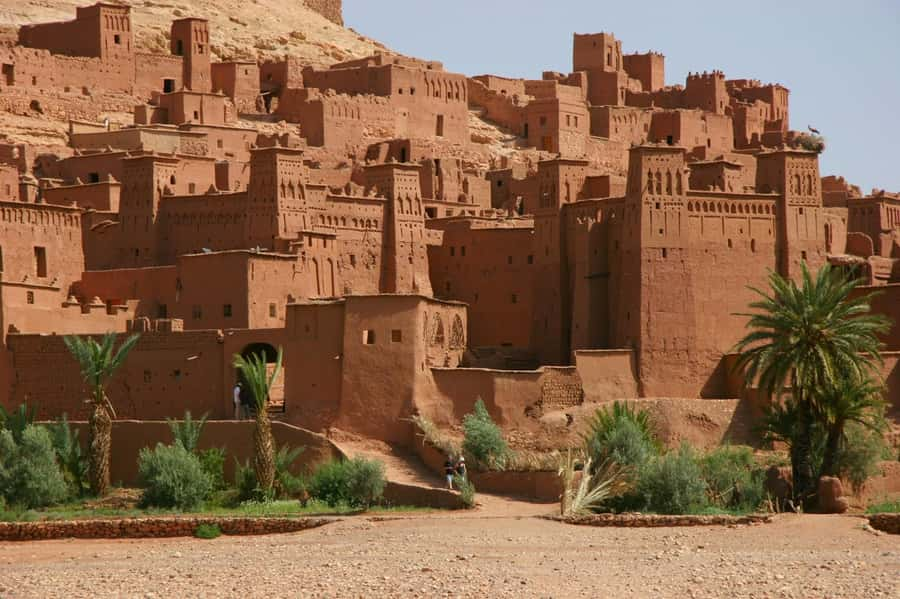
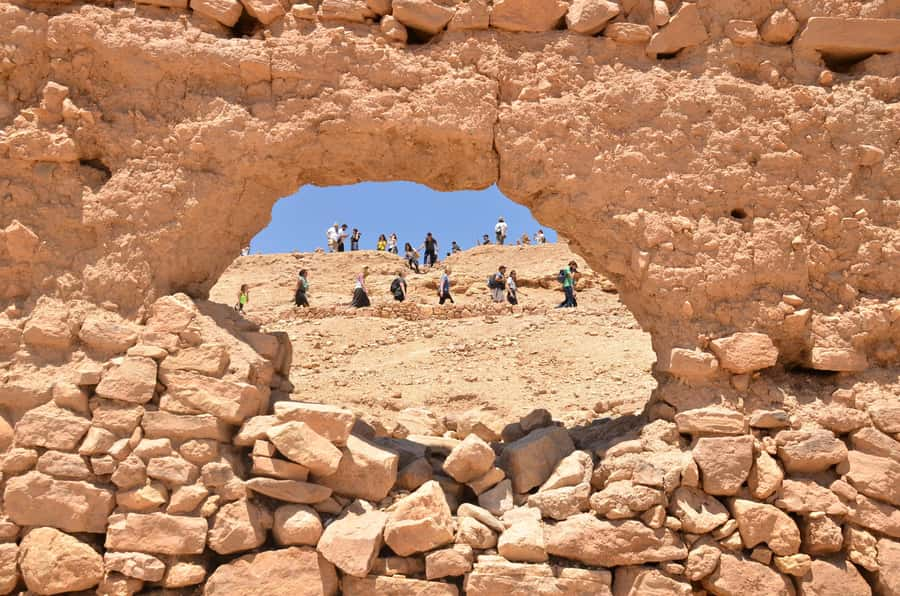
Ait Ben Haddou is the first major cultural stop, and it earns its place. The UNESCO-listed ksar is built from earthen clay, with clustered buildings rising above the surrounding dry country. It has also appeared in major Hollywood productions, but its value is not just cinematic.
The site gives you a clear look at southern Morocco’s traditional fortified architecture. You can walk among the buildings, look across the nearby valley, and see how much the color and texture of the place depend on sun and shadow.
A local guide is not included in the price and costs about €3. I consider that a worthwhile small extra if you want context on the buildings and local traditions. Without a guide, you can still see the site, but the visit may feel more like a photo stop than a cultural visit.
Timing can vary on group trips. Some stops may feel longer than you need, while others pass quickly. Bring water, listen for the meeting time, and use the free moments for photographs rather than assuming you can wander off on your own schedule.
Ouarzazate and the long run toward Tinghir
The route continues to Ouarzazate, where you stop for photographs of Kasbah Taourirt. The stop is focused on the exterior and the setting, so do not expect a long museum visit to be the central feature.
After Ouarzazate, the road heads toward Tinghir through the Valley of the Roses. The name sounds poetic, but the appeal here is the changing rural scenery, villages, dry hills, and cultivated pockets along the route. This is a road trip in the truest sense. The pleasure comes from watching Morocco shift outside the window.
You spend the night in Tinghir at Hotel Bougafer or a similar four-star hotel. A private room is provided, followed by dinner and time to rest. That overnight stop is important. Trying to reach Merzouga on the first day would make the journey far more punishing.
Some departures have offered access to a swimming pool, sometimes for an extra fee. After the first long day, that can be a welcome option, especially in hot months. Summer temperatures can rise above 40 degrees Celsius, so drink steadily and do not treat the pool as a substitute for water.
More Camel Rides in Morocco
- Marrakech: Agafay Desert Quad, Camel Ride & Dinner Show
★ 4.7 · 10,209 reviews - Marrakesh: Desert & Mountain Tour with Camel Ride & Lunch
★ 4.8 · 7,513 reviews - Marrakech: Agafay Desert Dinner Show with Quad Bike & Camel
★ 4.9 · 5,058 reviews - Marrakech: Camel Ride in the Oasis Palmeraie
★ 4.6 · 4,883 reviews
Day two: Tinghir Oasis and Todra Gorge
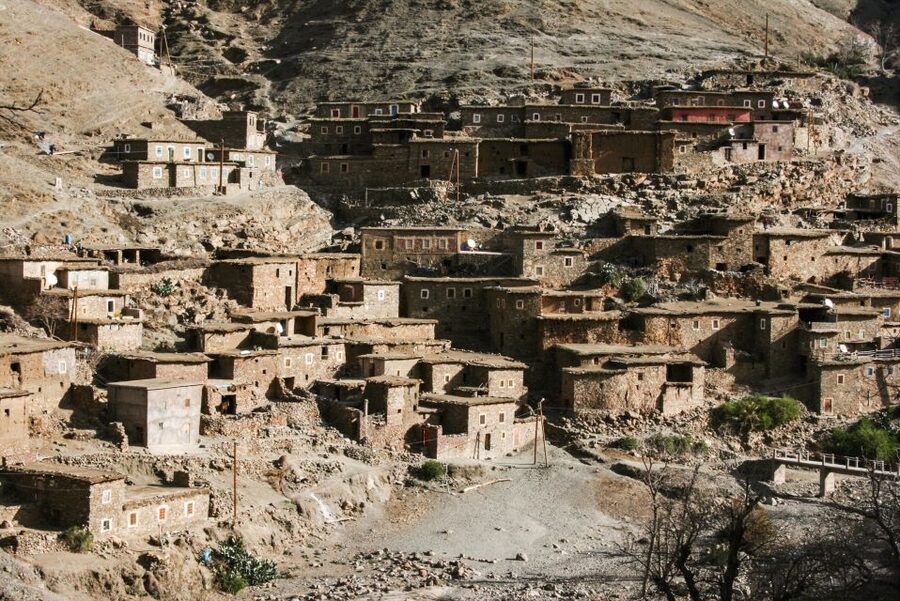
After breakfast, you travel along the route often called the Road of 1,000 Kasbahs toward Tinghir Oasis. A local guide leads you through palm groves and traditional villages, explaining local irrigation and daily life.
This is one of the tour’s most valuable stops because it gives the trip a human scale. The desert and mountains are impressive, but the oasis shows how people have made agriculture possible in a dry region. Look for the contrast between palms, water channels, village walls, and the surrounding bare slopes.
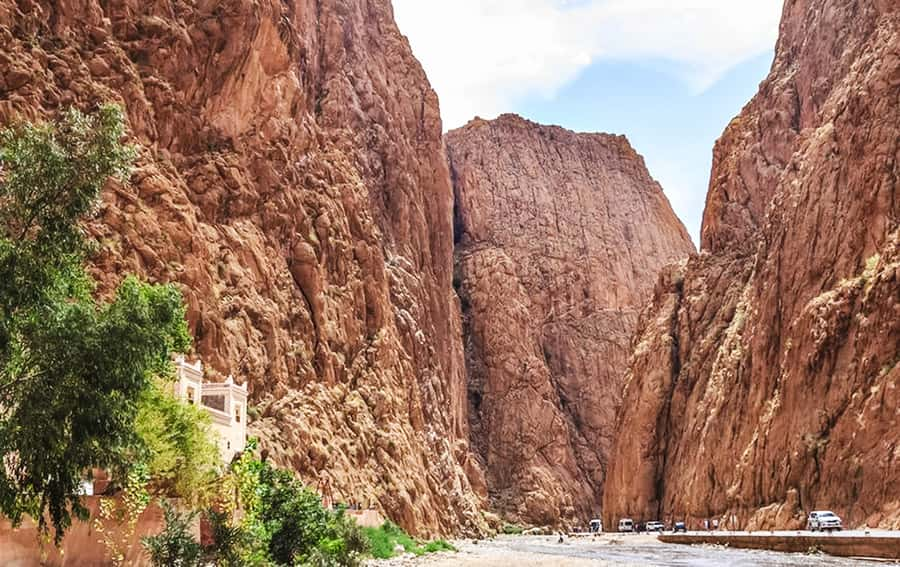
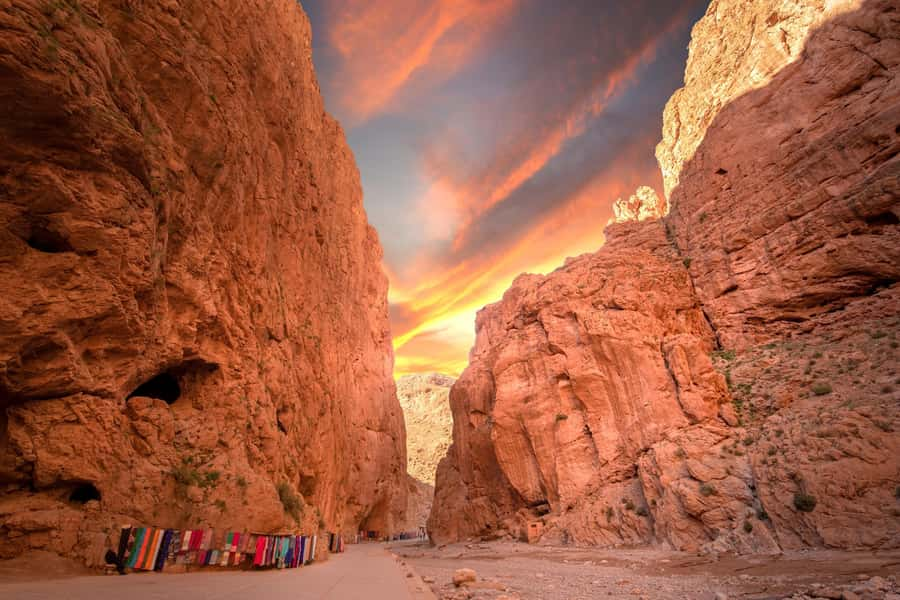
The guided walk continues to Todra Gorge. Towering cliffs rise above the river, creating one of the most dramatic natural settings on the route. You can walk through the canyon while learning about its geology, local history, and Berber culture.
A guide named Kamel was singled out for patience with slower walkers and for speaking several languages to a mixed-language group. Guides are assigned by departure, so you may meet someone else, but the operation provides local guidance in Tinghir and Merzouga, with English, French, Spanish, Arabic, and Italian available across the activity.
Wear shoes with a firm sole. This is not described as a difficult hike, but you will be walking in an uneven outdoor setting. If you have serious back problems, the long vehicle ride and repeated walks make this a poor fit.
Erfoud and the approach to the Sahara
After a lunch stop, the minibus continues toward Erfoud. The town is known for dates and for its position on old caravan routes that once crossed the Sahara toward Timbuktu.
The date market gives the journey another useful layer. You are not simply racing from Marrakech to a camp. You are following an old corridor of trade and settlement, where food, water, and transport shaped life across the region.
Lunch is usually bought separately at a planned stop. The food may be served buffet-style, and prices can be higher than a simple local meal. I would carry Moroccan dirhams as well as a little euro cash, since the exact payment arrangements can vary.
This is also a good point to buy water before the desert camp. Drinks are not included, and you should not count on being able to purchase everything at the last minute.
Erg Chebbi at sunset, the trip’s best hour
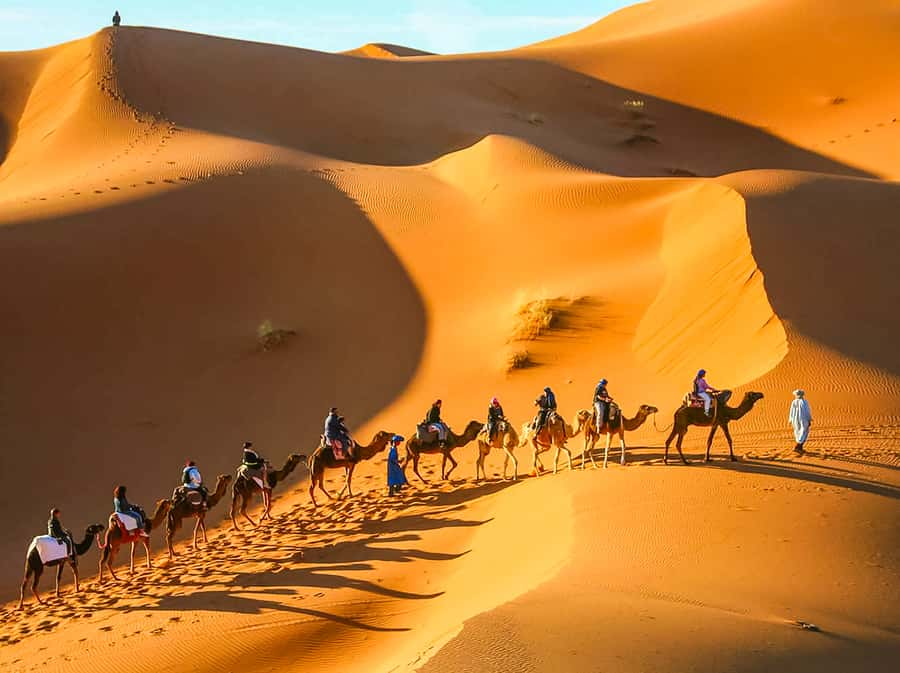
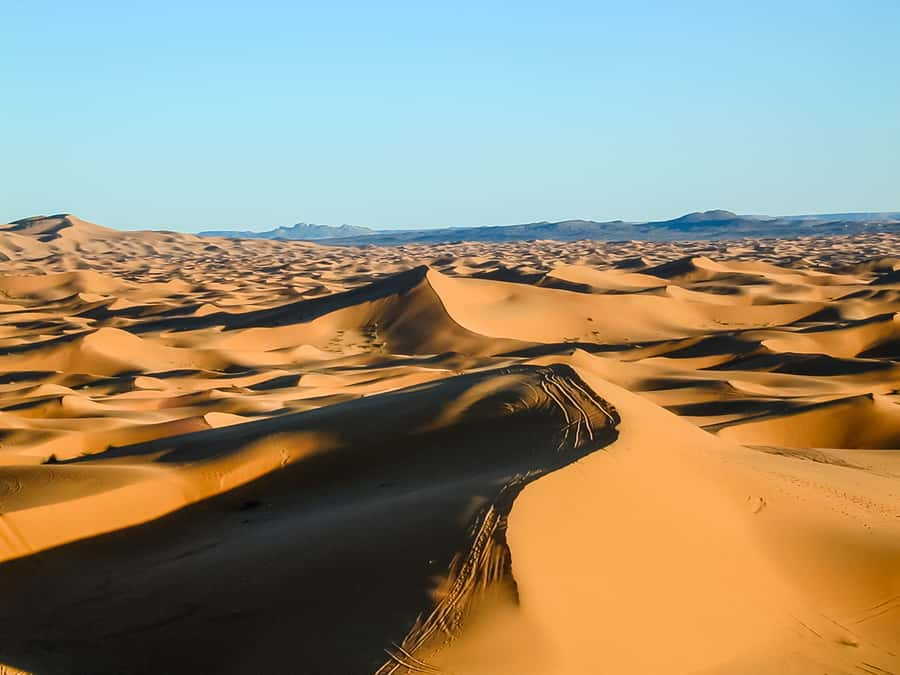
From Erfoud, you continue to Merzouga and the Erg Chebbi dunes. At the auberge, you leave the minibus and begin the camel ride toward the camp.
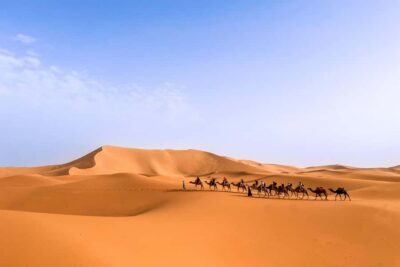
The sunset ride is the moment most likely to stay with you. The pace slows, the dunes turn warmer in color, and the noise of the road falls away. The camels are used to this route, but camel riding can be uncomfortable if you have back problems or are not used to sitting high above the ground.
You can also choose an optional quad-bike ride, and sandboarding is included. I would treat sandboarding as a fun extra rather than the main reason to book. The camel route and the changing light are the stronger parts of the desert visit.
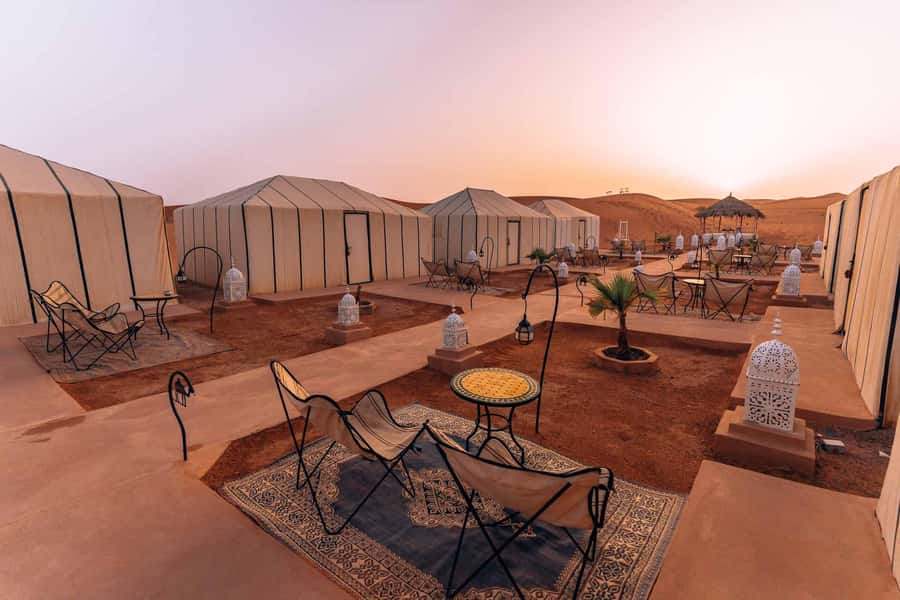
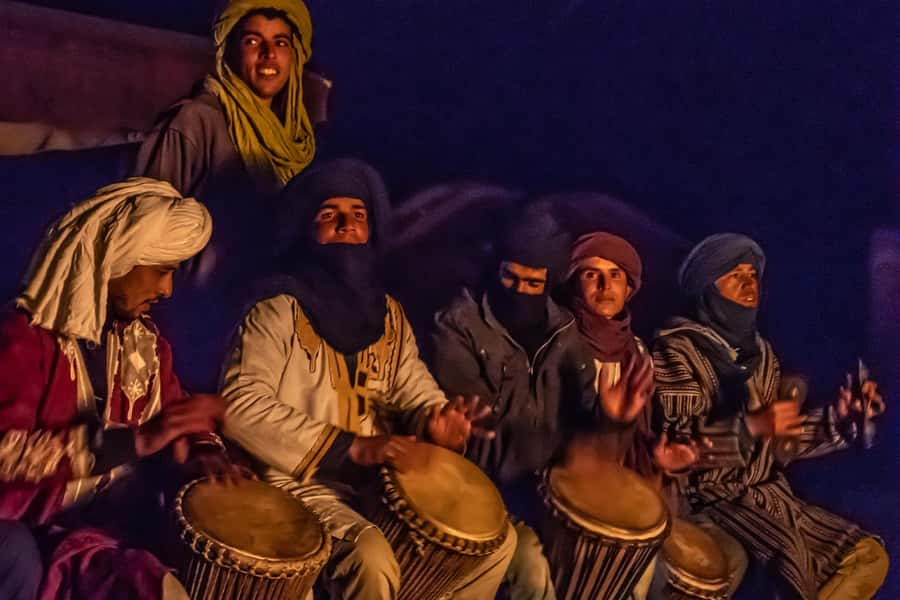
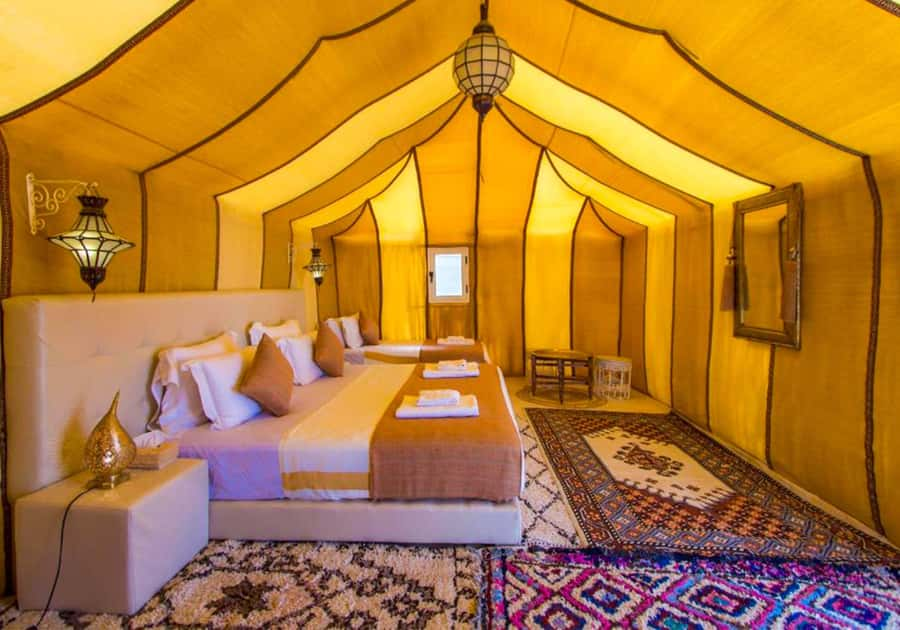
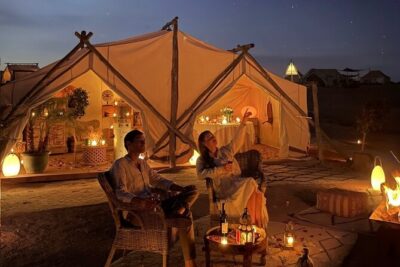
At the camp, dinner is served under the stars beside a fire. Local hosts play Berber music on drums, giving the evening a social feel rather than a silent wilderness retreat. The camp is basic in practical terms. Toilets are outside, and the shower is back at the auberge, not in the camp itself.
That arrangement is important. If you expect a full-service hotel room in the dunes, you may be disappointed. If you see the camp as a memorable overnight base with dinner, music, and open sky, it makes more sense.
Sunrise, breakfast, and the long road home
An early start takes you out for the desert sunrise. You then ride camels back to the auberge, where breakfast and a shower are available before the return drive.
The sunrise is worth protecting, even if you are tired. The desert is cooler and quieter at this hour, and the light gives the dunes a different shape from the evening before.
Then comes the least glamorous part of the trip: the drive back to Marrakech. It can take about 10 hours, including breaks and photo stops. Drivers such as Jamal, Hamid, Aziz, Mohammed, Laarbi, Damou, and Said have been praised for safe driving, regular stops, and helping people who felt unwell, but even a good driver cannot make the road short.
Use the breaks to stretch, refill water, and buy lunch. If you are planning an onward flight immediately after the tour, leave a generous buffer. The advertised route includes scenic stops, but road conditions, group pace, and stop lengths can affect the arrival time.
Guides, group rhythm, and comfort
The guide can shape this experience as much as the scenery. Drivers often act as the group’s main point of contact, and several have been praised for answering questions, helping solo passengers, handling mixed-language groups, and keeping the schedule moving.
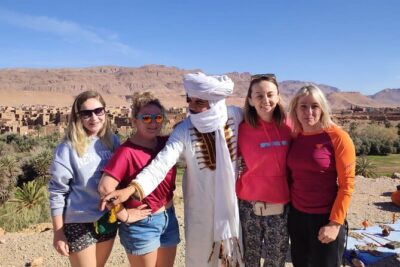
Jamal has been noted for speaking five languages and for giving useful information about Morocco. Laarbi has been praised for regular stops and friendly communication. Mustapha, Mohammed, Aziz, and Damou have also received strong marks for kindness and careful driving. These names are examples, not a promise of assignment, but they show the kind of personal service you can reasonably hope for.
Group tours depend on everyone arriving on time. One slow or inconsiderate person can affect the day, and some guided visits may last longer than you prefer. The upside is that you meet people from several countries and share the camel ride, camp dinner, and road stops.
The minibus is the key comfort question. Air conditioning and luggage storage are included, but several accounts describe the vehicle as tight for such a long route. Sit where you can, keep a light layer and water within reach, and use every stop to move your legs.
What to pack for the desert
Take your passport or identification card, comfortable shoes, sunglasses, a hat, and long trousers. I would also add warm layers for the desert night and early morning, even if Marrakech is hot when you leave.
Summer brings a different problem. The camp tents can be very hot at night, while other seasons may feel cold after dark. Water is essential in every month.
Keep cash available for lunch, drinks, the Ait Ben Haddou guide, quad biking, swimming, and tips. Store luggage during the trip if needed, but keep medications, identification, a phone charger, and a change of clothes in a small day bag for the camp.
The tour does not allow pets or smoking in the vehicle. It is not suitable for wheelchair users, and people with back problems should choose carefully because of the minibus hours and camel ride.
Should you book this Merzouga tour?
Book it if you want to see a large slice of southern Morocco in a short time, and if the desert night matters more to you than slow travel. At $113, the package covers a great deal, especially the hotel, camp, meals, guides, transport, camel rides, and sandboarding.
Skip it if long road days wear you down, you need accessible facilities, or you want deep time at each stop. The return to Marrakech is especially demanding, and the camp has outside toilets with the shower at the auberge.
For most fit visitors with limited time in Morocco, I see this as a memorable and practical route. Pack lightly, carry cash, bring warm clothes even in summer, and accept that the road is part of the experience. The reward is a sunset over Erg Chebbi, drums after dinner, and a sunrise that makes the long drive feel worthwhile.
FAQ
Is lunch included on the three-day Merzouga tour?
No. Lunch and drinks are not included. Budget about €12 to €13 per person for some buffet-style lunch stops, and carry cash for drinks, which may cost about €10 to €12.
What accommodation is provided?
The first night is in a private room at Hotel Bougafer in Tinghir, or a similar four-star hotel. The second night is in a desert camp at Erg Chebbi. Toilets are outside at the camp, and the shower is available at the auberge.
Is the camel ride included?
Yes. Camel trekking in Erg Chebbi is included, with a ride toward the camp at sunset and a return ride after the desert sunrise.
What languages are available?
The activity offers English, French, Spanish, Arabic, and Italian. Local guides are provided in Tinghir and Merzouga, while the exact driver or guide depends on the departure.
Can I ride a quad bike in the desert?
Yes, quad biking is available as an optional extra. Sandboarding is included.
Where does pickup take place in Marrakech?
Pickup is available from accommodation in Gueliz, Hivernage, and nearby New City areas. If you stay in the Old Medina, a nearby walking meeting point is arranged because the lanes are too narrow for vehicle access. Pickup starts around 7:20, and you should be ready 10 minutes early.
More Multi-Day Desert Tours in Morocco
- From Marrakech: 2-Day Sahara Tour to Zagora & Ait Ben Haddou
★ 4.4 · 1,925 reviews - From Marrakech: 3-Day Sahara Tour with Private tent & Meals
★ 4.8 · 1,652 reviews - From Marrakech: 2-Days luxurious experience to Zagora Desert
★ 4.9 · 1,502 reviews - From Marrakech: 3-Day Sahara Desert Adventure to Fes
★ 4.5 · 1,405 reviews
More Multi-Day Desert Tours in Marrakech
- From Marrakech: 3-Day Merzouga and Sahara Desert Tour
★ 4.9 · 15,308 reviews - From Marrakech: Merzouga 3-Day Desert Safari with Food
★ 4.7 · 12,232 reviews - Marrakech: Agafay Desert Magical Overnight with Dinner Show
★ 4.2 · 2,941 reviews - From Marrakech: Unforgettable 3-Day Desert Tour to Fes
★ 4.9 · 2,614 reviews
New desert trips around Marrakesh
- Three valleys, Atlas Mountain, waterfalls & Agafay Desert★ 5.0 · 13 reviews
- Marrakech palm grove: Sunset camel ride★ 4.8 · 194 reviews
- Marrakech : Agafay Desert Sunset Camel Ride & Luxury Dinner★ 4.3 · 39 reviews
- Marrakech: Sunrise Desert Tour with Camel Ride and Breakfast★ 4.4 · 36 reviews
- From Marrakesh: Private 4-Day Sahara Desert Discovery Tour★ 4.9 · 63 reviews
- Romantic Dinner & Camel Ride In Agafay Desert★ 3.8 · 8 reviews
- Quad biking in Agafay Desert with lunch & Camel Ride & pool★ 4.5 · 186 reviews
- Quad bike and Lunch & Pool in Desert Marrakech Agafay★ 4.8 · 47 reviews
Marrakech Desert Safaris, compared.
Agafay Desert Sunset, Camel Ride, and Dinner Show
Read our review →
Agafay Desert Quad & Camel Rides with Dinner Show
Read our review →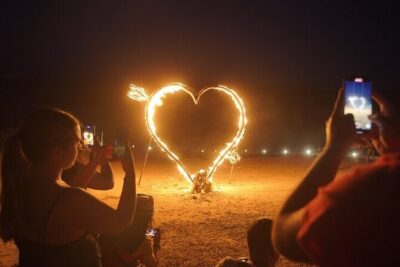
Agafay Desert Quad Biking Tour with Dinner-Show
Read our review →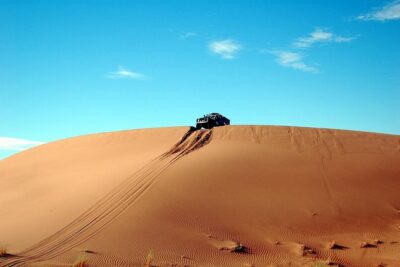
3 Days Desert Tour From Marrakech To Merzouga Dunes & Camel Trek
Read our review →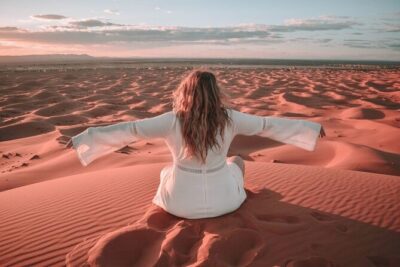
3-Day Marrakech to Merzouga Desert Tour: Camel Rides & Overnights
Read our review →