
Review · FEZ
From Fez: 3-Day Merzouga and Ouarzazte Tour to Marrakech
The best part of this trip is the sudden change from cedar forests and snowy Atlas peaks to the orange dunes of Erg Chebbi. In three days, you see monkeys near Ifrane, date palms, kasbah country, rocky gorges, desert villages, and the great earthen walls of Ait Ben Haddou. It is a lot of Morocco in one short ride.
I like the camel ride at sunset, followed by a night in a desert tent, and I like the human side of the trip. Drivers such as Karim, Tarek, Momo, and Younes Kerroumi are often praised for careful driving, clear explanations, photo stops, and help with luggage. The catch is simple: you spend long hours in the vehicle, and some lunch and shopping stops feel expensive and overly arranged.
Key points to know before booking
- Seven-hour first day: You cross the Middle Atlas from Fez to Merzouga, with stops in Ifrane, the cedar forests, and Midelt.
- Camel trekking at sunset: The ride to the desert camp is the emotional high point, with a sunrise return the next morning.
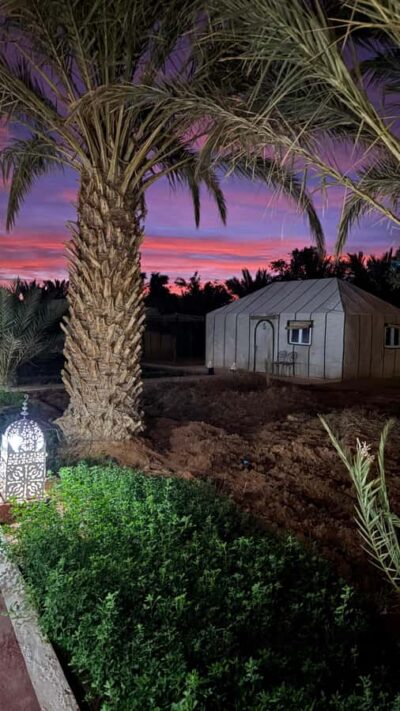
- Comfortable desert camping: The upgraded tents generally include private bathrooms, showers, electricity, and proper beds, though standards can vary.
- Two very different driving days: Todra Gorge and the Dades Valley fill the second day, while Ait Ben Haddou and the Atlas Mountains fill the third.
- Lunch is extra: You pay for midday meals and drinks, and several stops have been criticized for high prices and average food.
- Small-group format: The vehicle carries up to 17 people, though some departures use a spacious nine-seat vehicle with fewer passengers.
What this Fez to Marrakech route really involves
This is not a relaxed desert holiday. It is a transport-heavy sightseeing trip that uses the long journey between Fez and Marrakech to show you southern Morocco. At $170 per person, the value comes from combining transport, a camel trek, desert camping, two dinners, two breakfasts, a second-night hotel or riad, and a driver who handles the mountain roads.
The route covers enough ground that you should think of it as a moving tour. You will spend much of each day in the vehicle, often on winding roads. That is the price of seeing the Sahara without arranging several separate transfers.
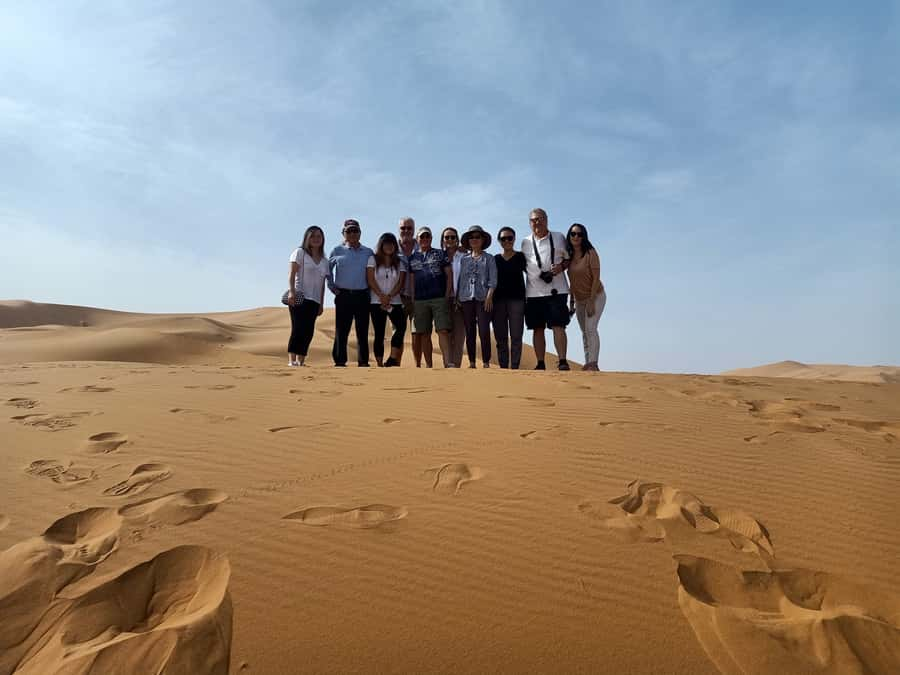
The group is limited to 17 people, but actual vehicle size depends on the departure. Several passengers had a nine-seat vehicle with only seven people aboard, which gives you more room than a full minibus. The driver speaks English or French, and the quality of the commentary depends on who you get. Karim, Tarek, Momo, Hafid, and Younes Kerroumi received especially warm praise for communication and care.
More Multi-Day Desert Tours in Fez
- From Fez: Sahara Desert 2-Day Tour with Merzouga Camp Stay
★ 4.8 · 1,716 reviews - From Fes to Marrakech: 3-Day Sahara Desert Discovery Tour
★ 4.7 · 1,158 reviews - From Fes: 2-Day Merzouga Desert Trip w/Luxury Tent & Dinner
★ 4.7 · 844 reviews
Day 1: Fez, Ifrane, cedar forests, and the road to Merzouga
Pickup is around 7:30 in the morning from your hotel or accommodation in Fez. The first section climbs into the Middle Atlas Mountains, where the setting changes quickly from city streets to open mountain scenery.
Ifrane is an unusual first stop. Its cool mountain setting and European-style appearance make it feel unlike the Morocco most people picture. After Ifrane, the road reaches cedar forests where Barbary macaques live. You may stop to feed them, and this is one of the few moments when you can stretch your legs and get close to wildlife.
The monkey stop is fun, but keep your belongings secure and follow the driver’s instructions. This is not a long nature walk. It is a short roadside visit that breaks up the drive.
You continue toward Midelt, a mountain town known for its position between the Middle Atlas and the High Atlas. This is usually the practical lunch stop. Lunch is not included, so plan to carry snacks and water, even if you intend to eat at the arranged restaurant.
The afternoon brings wider views, high plateaus, villages, and increasingly dry terrain. By the time you reach Merzouga, the change is striking. Stone and scrub give way to the broad sands of Erg Chebbi, the dune system that provides the classic Sahara setting.
The drive is listed at about seven hours, but stops and road conditions affect the exact timing. Winter weather can make the route harder. Snow and hail have affected Atlas crossings, and one departure required a major detour because of heavy snowfall. Drivers have handled these changes safely, but you should accept that the planned timing can shift.
Sunset by camel and a night in the Merzouga desert
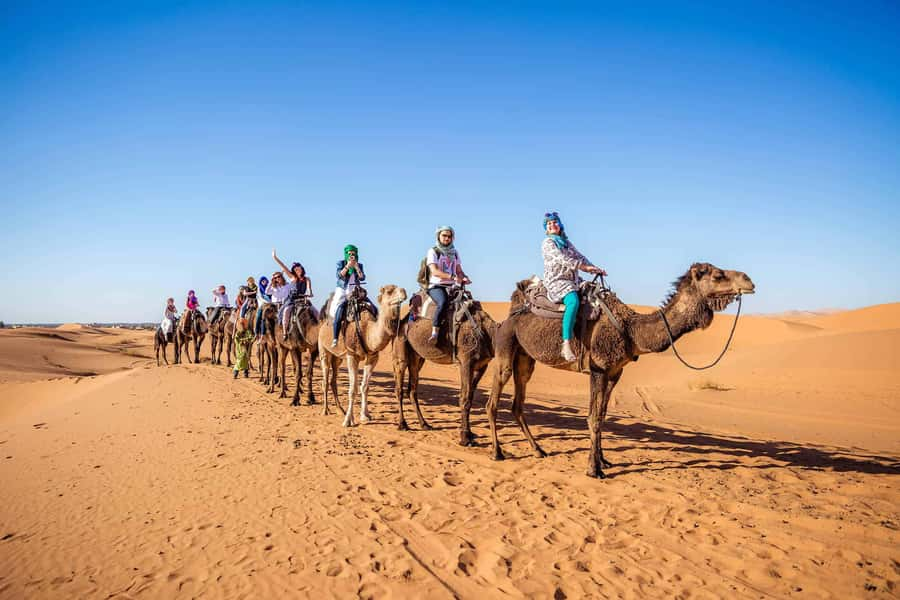
At Merzouga, you transfer from the vehicle to camels for the ride across the dunes. The timing usually places you near camp around sunset, though the exact duration and light depend on the day’s schedule.
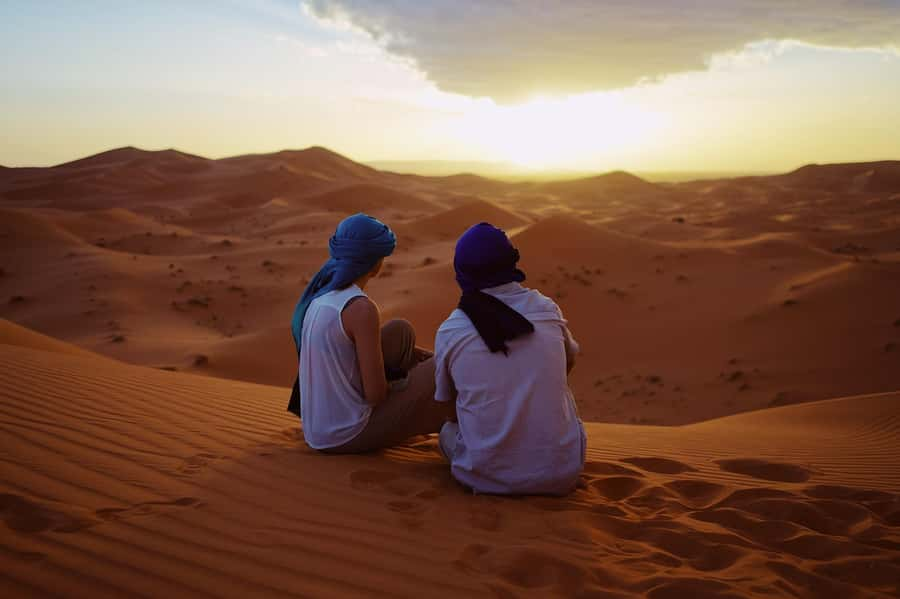
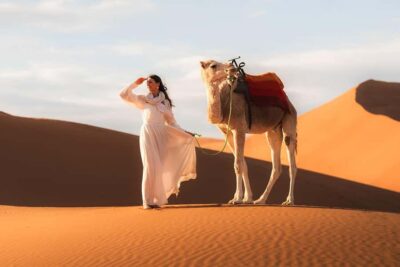
The camel ride is the trip’s main event. From the saddle, you move at a slow pace over soft sand, with the dunes changing color as the sun drops. It is not the fastest or most comfortable form of transport, but the slowness is part of the appeal. You have time to look around, take photographs, and feel the scale of the desert.
You sleep in a desert camp described as luxury camping. Many tents have a private bathroom, shower, electricity, and a comfortable bed. That is a major advantage over basic camping, especially after a full day on the road. Still, do not assume every tent has the same standard. One departure found the camp less clean and comfortable than expected, while others found it far better than expected.
Dinner is included at camp. You can also expect a communal evening with music and dancing around the fire. Food quality is uneven in the reports, with some finding it plentiful and others finding the portions limited. In practical terms, you are paying for the setting and the overall desert night as much as the meal.
The camp stay is shorter than it may sound. One schedule reached camp around 6:30 pm, served breakfast at 5:30 am, and started the camel ride back early. You should enjoy the night, but do not expect a full day of free time among the dunes.
Sunrise, breakfast, and the return from the dunes
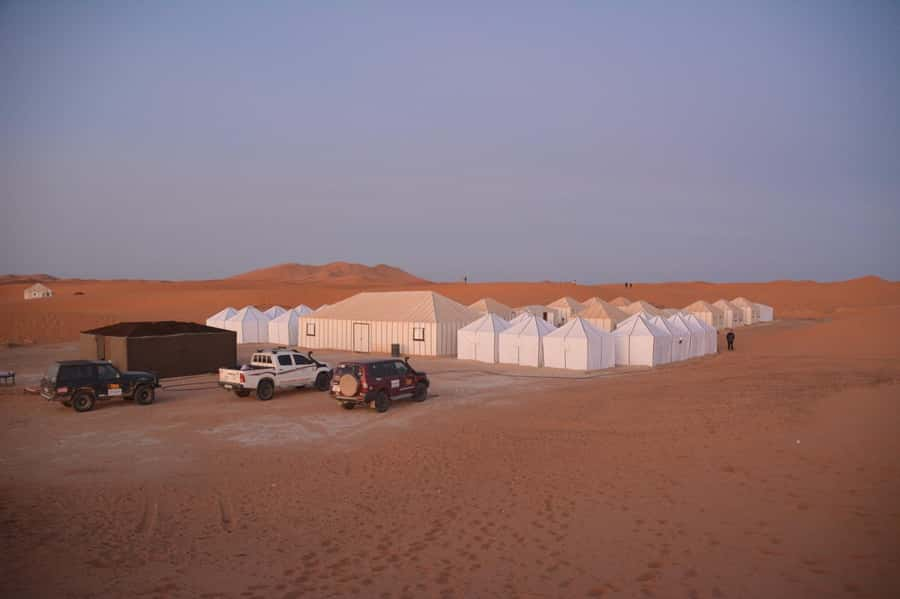
The next morning starts early. You can ride camels back to the hotel area for breakfast and a shower, then continue by vehicle. The early start is hard in winter, when temperatures can be very low before sunrise. Bring warm layers, gloves, and a proper jacket. Winter in the desert is not simply mild weather with sand.
A taxi transfer from camp may be available if you do not want the return camel ride, but the camel option is the better choice if you want the complete desert experience. It gives you another chance to see the dunes in morning light, when the sand is often cooler and the shadows are sharper.
You receive breakfast before the next long drive. The package includes breakfast and dinner in Merzouga, but lunch remains your responsibility.
More Multi-Day Desert Tours in Morocco
- From Fes: 3 Days and 2 Nights Desert Trip to Marrakech
★ 4.6 · 460 reviews - From Fes: 2-Day Desert Tour with Return to Fes or Marrakech
★ 4.6 · 427 reviews - From Fes To Marrakech: 3-Day Sahara Desert Tour & Camel Trek
★ 4.8 · 389 reviews - From Fes: 3-Day 2-Night Desert Tour to Marrakech
★ 4.5 · 259 reviews
Day 2: Todra Gorge, Dades Valley, and the Road of a Thousand Kasbahs
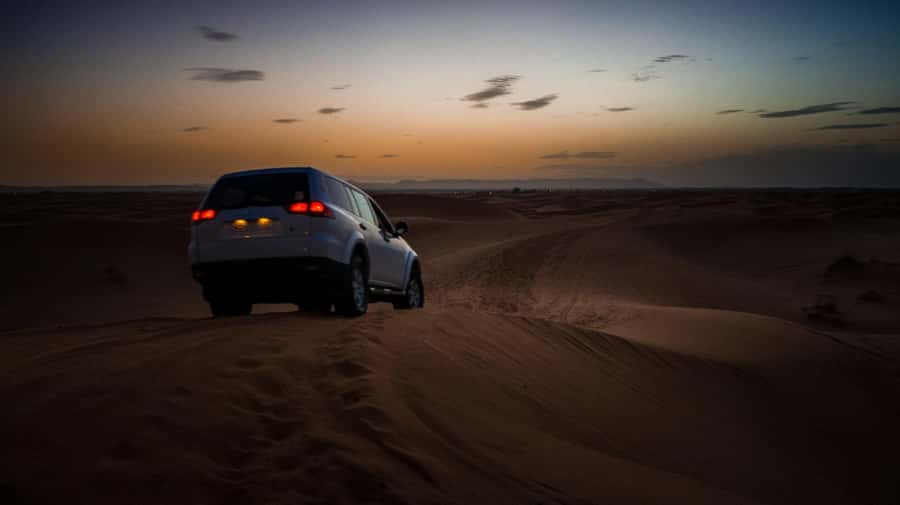
After leaving Merzouga, the route heads west toward Todra Gorge. The scenery changes again, moving from open sand to rocky desert, palm-filled oases, and mountain valleys.
Todra Gorge is known for its tall polished rock walls. The road reaches a narrow section where the cliffs rise sharply on both sides. The stop is mainly about the scale of the rock and the contrast between the dry valley floor and the steep canyon walls.
You then continue through the Dades Valley, an area of red rock, cultivated land, and old mud-brick buildings. The road is often described as the Road of a Thousand Kasbahs, a useful name for a route lined with fortified houses, villages, and old earthen structures. Not every building is a grand monument, but together they show how people adapted to hot, dry conditions.
This is another long day in the vehicle. The road curves through the Atlas foothills, so anyone prone to motion sickness should bring medication. There are toilet and coffee breaks, but the day still requires patience.
Kalaat M’Gouna is one of the planned stops. The town is linked with roses and local products, and it often forms part of the shopping side of the route. You may also encounter fossil workshops, carpet sellers, or other commercial stops. These can be interesting if you want to understand local crafts, but prices may be much higher than in a Moroccan market. You are not required to buy anything, and it is sensible to treat every sales presentation as optional.
The second night is in Ouarzazate, usually in a hotel or riad. The accommodation is often described as comfortable, and one property had a swimming pool. Dinner and breakfast are included there. Food is generally filling, but vegetarian choices can be limited and the quality is not always memorable.
Ouarzazate and the movie studio choice
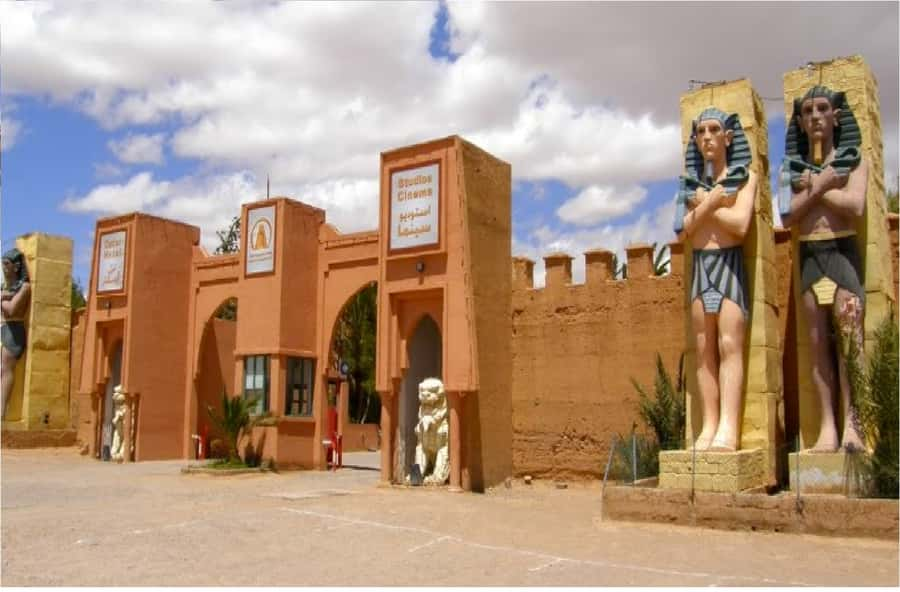
Ouarzazate is closely linked with film production, thanks to its dry scenery and historic-looking architecture. Atlas Studios is the main optional attraction connected with this theme, but its entrance fee is not included.
This matters because the itinerary may bring you near the studio without covering admission. You should ask your driver early in the day if you want to visit, since time can be tight after the previous day’s drive. Some groups have adjusted the final schedule to fit in Atlas Studios, while others arrived in Ouarzazate too late or were too tired for extra sightseeing.
The studio can be worthwhile if you enjoy film sets and want a different angle on the region. If your priority is old villages, mountain scenery, and the desert, you may prefer to save your time and money for Ait Ben Haddou.
Day 3: Ait Ben Haddou and the High Atlas crossing
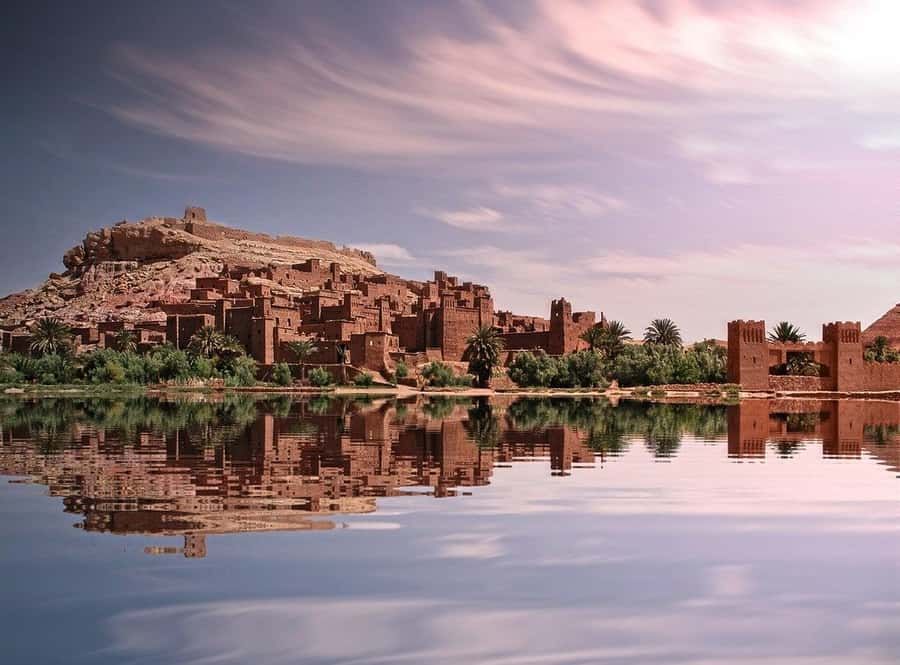
After breakfast, you head toward Ait Ben Haddou, one of Morocco’s most recognizable fortified villages. Its earthen walls and clustered buildings rise above the surrounding terrain, creating a dramatic view long before you reach the entrance.
Ait Ben Haddou is the strongest cultural stop on the final day. The settlement has been used as a location for major films and television productions, but its value is not limited to its screen appearances. The compact lanes, defensive form, and mud-brick construction show how an old trading settlement was organized.
Wear shoes with a good grip. You will walk on uneven ground and climb through narrow passages. The site is far more rewarding when you take time to look beyond the famous views and notice the construction details, rooftop angles, and changing color of the walls.
Lunch is again extra. The arranged restaurants make sense for a group vehicle because they can handle many people and have parking, but prices are often higher than local standards. Several people found the food average. I would carry fruit, nuts, or sandwiches as a backup and treat the restaurant lunch as a convenience rather than a highlight.
The final crossing takes you over the High Atlas Mountains toward Marrakech. This is another scenic section, with high peaks, Berber villages, and sharp changes in elevation. In winter, this is the part of the route most vulnerable to snow and road closures. A detour can add many hours, so avoid scheduling an important evening flight or fixed appointment on arrival day.
Drop-off in Marrakech can take time because the medina streets are crowded and vehicles cannot reach every door. Drivers such as Karim and Younes Kerroumi have been praised for taking each person as close as possible to their accommodation and helping with luggage. That extra effort matters after three days on the road.
Guides, vehicles, and the human side of the trip
The driver can make or break a route this demanding. You need someone who drives safely on mountain roads, explains the schedule clearly, and stops when the group needs a break.
The strongest names associated with the experience include Karim, Tarek, Momo, Hafid, and Younes Kerroumi. Karim is often praised for humor, multilingual communication, and careful attention to older passengers. Tarek is known for explaining the daily plan and helping people avoid unwanted sales pressure. Momo is frequently described as friendly, patient, and strong in English.
You cannot guarantee a particular driver when booking, so keep your expectations focused on the service promised rather than one individual. Some people have found the first driver more like a transport operator, with fuller explanations coming from the second driver after Merzouga. That difference is worth knowing.
The air-conditioned vehicle is a real benefit. Long drives in Moroccan heat would be much harder without it. The small-group limit also keeps the trip more manageable, though a full vehicle will feel less spacious than the nine-seat versions used on some departures.
Food, costs, and what to pack
At $170, this is a strong value if you want to travel from Fez to Marrakech while seeing the desert. Transport, fuel, drivers, camel support, one desert night, one hotel or riad night, and four included meals cover the costly parts of the route.
The main extra cost is lunch. Drinks are also not included, and the arranged restaurants can charge around 120 dirhams, or about 12 euros, per person. Some menus are buffet-style and some offer a fixed selection. Food quality has been the most consistent weakness, with complaints about high prices, limited vegetarian choices, and one case of food poisoning.
Bring cash, water, snacks, warm winter clothing, sun protection, and motion sickness tablets if you need them. Your clothing should handle both cold mountain weather and hot sand. A scarf can help in the desert, while closed shoes are useful for Ait Ben Haddou and rocky stops.
Free cancellation is available up to 24 hours before departure, and you can reserve without paying immediately. The activity is listed as wheelchair accessible, but you should discuss your exact mobility needs in advance because camel boarding, uneven sites, and remote camp access are not simple for everyone.
Who should book this three-day tour?
You should book it if you have only three days, do not want to drive, and want one efficient route from Fez to Marrakech with the Sahara as the main prize. It suits first-time visitors who want plenty of scenery and do not mind a busy schedule.
You should think twice if you want slow travel, long walks, quiet village visits, or several hours alone at the desert camp. A four or five-day route would give you more breathing room and reduce the pressure of the long drives.
The overall rating of 4.6 from 340 reviews reflects a consistently strong experience, but the pattern is clear: the desert, scenery, accommodation, and drivers receive the best response. Lunches, sales stops, tight timing, and long hours in the vehicle are the weak points.
Should you book it?
For most first visits, I would book this tour if the Fez to Marrakech transfer is already part of your plan. You get the essential desert sequence, sunset camels, sunrise, Todra Gorge, Ouarzazate, and Ait Ben Haddou for a reasonable price.
Book it with realistic expectations. You are buying access to a huge slice of Morocco, not a restful retreat. If you can accept early mornings, winding roads, extra-cost lunches, and a few tourist-oriented stops, the changing scenery and desert night make this a memorable way to cross the country.
FAQ
How long is the tour?
The tour lasts three days and includes two nights, one in the Merzouga desert camp and one in a hotel or riad in Ouarzazate.
Where does the tour start and finish?
Pickup is from your hotel or accommodation in Fez, and drop-off is in Marrakech.
Is the camel ride included?
Yes. A local camel guide is included, along with the camel ride to the Merzouga desert camp and the return ride the next morning.
Are meals included?
Dinner and breakfast are included in Merzouga, and dinner and breakfast are included at the Ouarzazate accommodation. Lunches and drinks are not included.
Is Atlas Studios included?
No. Entrance to Atlas Studios in Ouarzazate is an extra cost.
What languages does the driver speak?
Drivers are available in English and French.
Can I cancel the tour for a refund?
Yes. You can cancel up to 24 hours in advance for a full refund. You can also reserve now and pay later.
More Multi-Day Desert Tours in Fes
- From Fes To Marrakech: 2-Days with Luxury Camp, Desert Tour
★ 4.9 · 237 reviews - From Fez: 2-Day Marrakech via Merzouga Desert Tour
★ 4.5 · 174 reviews - From Fes: 3-Day Luxury Desert Tour to Marrakech via Merzouga
★ 4.8 · 124 reviews - From Fes: 2-Day Luxury Desert Tour to Marrakech & Back Fez
★ 4.7 · 96 reviews
New desert trips around Fes
- the luxury 2days 1night desert tour from fez to fez/marakech★ 4.7 · 28 reviews
- From Fes: 2-Day Sahara Tour with Private Tent & Meals★ 4.9 · 7 reviews
- From Fes: Imperial Cities Highlights and 8-Day Sahara Trip★ 4.5 · 7 reviews
- From Fez: 2-Days Desert Tour to Marrakech via Merzouga★ 4.3 · 40 reviews
- From Fes: 3-Day Sahara Desert Tour to Marrakech★ 4.8 · 32 reviews
- From Fes To Marrakech: 2-Days with Luxury Camp, Desert Tour★ 4.9 · 237 reviews
- From Fez: 2-Day Marrakech via Merzouga Desert Tour★ 4.5 · 174 reviews
- From Fes: 4-Day Trip to Marrakech via Merzouga & Gorges★ 4.4 · 29 reviews
Fez Desert Safaris, compared.
Sahara Desert 2-Day Tour with Merzouga Camp Stay
Read our review →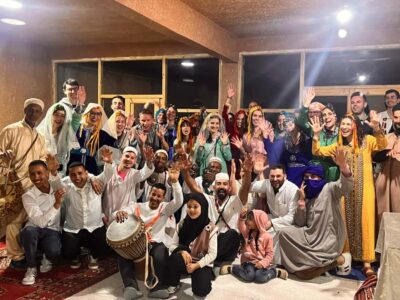
From Fes to Marrakech: 3-Day Sahara Desert Discovery Tour
Read our review →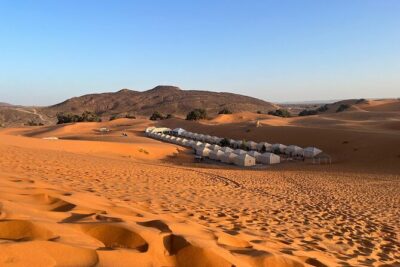
Best Fez to Marrakech via Merzouga Desert Dunes, 3 Days Tour
Read our review →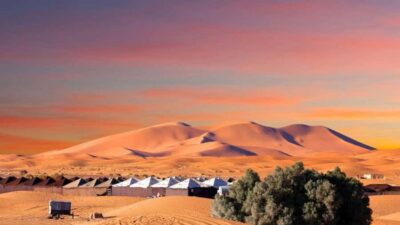
2-Day Merzouga Desert Trip w/Luxury Tent & Dinner
Read our review →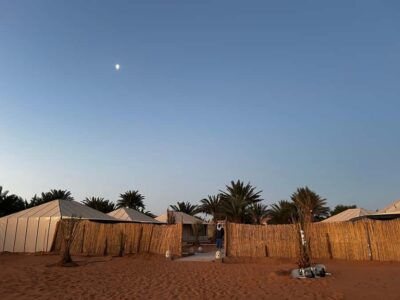
From Fes To Marrakech: 3-Day Sahara Desert Tour & Camel Trek
Read our review →
2Days Desert Tour From Fez: Round-Trip with Luxury Camp stay
Read our review →Other lists this trip appears in