
Review · CASABLANCA
10-days Private tour in Morocco: Sahara Desert + Imperial Cities
The best part of this 10-day Morocco trip is its sweep: you move from the Atlantic coast to Roman ruins, blue mountain lanes, an enormous medieval medina, the Sahara dunes, and Marrakech’s famous souks. The overnight desert camp and the private format give the journey its strongest character. You can set the pace with your own group instead of following a large coach.
I especially like the mix of planned touring and free meal choices. I also like that the route includes less-polished stops such as Rissani’s market and Khamlia, not only Morocco’s headline sights. The tradeoff is distance: several days involve long drives, and entrance fees for monuments and museums are extra.
Key points to know before booking
- A full cross-country route: Casablanca, Rabat, Chefchaouen, Volubilis, Meknes, Fes, the Atlas region, Merzouga, the Dades Valley, Ouarzazate, Ait Benhaddou, and Marrakech all fit into 10 days.
- Private touring changes the pace: Your group can spend more time at places that interest you and keep many meals independent.
- The Sahara night is the centerpiece: You ride a camel, watch sunset from the dunes, and sleep in a luxury tent.
- The best guide pairing is named: Hassan is praised for guiding, with Ahmed serving as driver on one highly positive booking.
- Only some food is included: You receive nine breakfasts and three dinners, so budget for most lunches and several evening meals.
- Monument tickets cost extra: This includes major places such as Hassan II Mosque, Volubilis, Fes sites, Bahia Palace, Ben Youssef Medersa, Majorelle Garden, and the Yves Saint Laurent Museum.
From Casablanca’s mosque to Rabat’s royal monuments
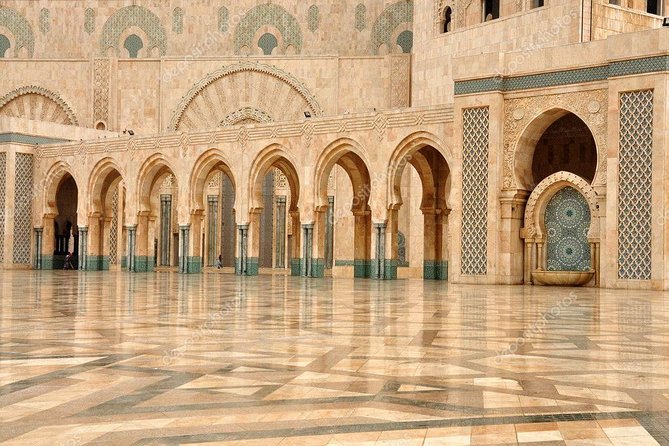
Your arrival begins in Casablanca, with airport pickup and a short welcome period before the city sightseeing. The central visit is Hassan II Mosque, one of Morocco’s major modern landmarks and one of the few mosques in the country open to non-Muslim visitors. A guided visit can help you understand Islamic customs, the building’s design, and its place beside the Atlantic.
Admission is not included, so check the current cost when planning your budget. The schedule also allows time for Rick’s Café, a film-inspired piano bar near the old medina. It recreates details associated with the movie Casablanca, including arches, balconies, brass lighting, and a sculpted bar. It is a themed stop rather than an ancient monument, but film fans may enjoy the atmosphere.
The route then continues to Rabat. On the second day, you see the Hassan Tower, the Mausoleum of Mohammed V, and the Kasbah des Oudaias. These visits work well together. The tower and mausoleum present Morocco’s royal and religious traditions, while the kasbah offers white and blue homes, gardens, and a more intimate walk through an old fortified quarter.
I would treat Rabat as a useful introduction to Morocco. It is more measured than Marrakech, and the first day gives you time to settle in before the longer overland sections begin.
More Private Desert Safaris in Morocco
- From Marrakech: 3-Day Sahara Tour with Private tent & Meals
★ 4.8 · 1,652 reviews - Tangier Private Day Tour From Tarifa Including Ferry & Camel Ride
★ 5.0 · 282 reviews - From Marrakesh: 4-Day Private Atlas Mountains & Desert Tour
★ 4.8 · 197 reviews
Chefchaouen’s blue lanes and mountain setting
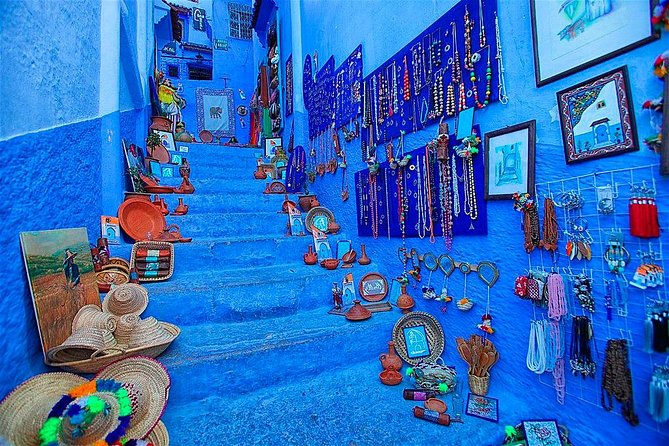
The drive to Chefchaouen is one of the route’s visual highlights. You have about six hours there, enough for a useful walk through the medina and time around Hammam Square. The town is known for blue-painted streets, handicrafts, goat’s cheese, and its position among the Rif and Middle Atlas mountains.
The color scheme is not the only reason to visit. Chefchaouen feels more orderly than many Moroccan medinas, with lanes that repeatedly lead toward the central square. That makes it a good place to get comfortable with narrow streets, small shops, and the rhythm of local life before reaching Fes.
The limitation is timing. The tour gives you a strong taste of Chefchaouen, but not an extended stay. If this town is your main reason for visiting Morocco, you may want to ask how much time is actually available for walking, shopping, and photography on your date.
Roman Volubilis, imperial Meknes, and the first look at Fes
Day three combines three very different places. Volubilis provides the clearest contrast to the Islamic cities on the route. These Roman ruins were once a major administrative center in North Africa, and you can spend about two hours among the remains. Admission is extra, and sturdy shoes are sensible for uneven ground.
Meknes follows with a tour of the imperial city sometimes called the Versailles of the Maghreb. The focus is on Sultan Moulay Ismail and his plan to make Meknes one of the grandest cities in North Africa. A local guide adds context to the gates, walls, and royal ambitions that are easy to miss on a quick independent visit.
You reach Fes later in the day, with a short panoramic look before dinner. The suggested Clock Café is a practical option for something beyond standard tagine and couscous, with a menu that may include camel burgers and cultural events such as storytelling, film nights, and Arabic calligraphy workshops. Those activities are not included, so treat them as optional ideas rather than fixed parts of the tour.
Five hours inside the Fes medina
Fes deserves the dedicated half-day it receives on day four. Its old medina is a maze of more than 9,000 streets, and a city guide is particularly useful here. Without help, you can spend a lot of time simply trying to find your way between the main sights.
The visit includes important palaces, the Jewish quarter, a madrasa, and Quranic institutions, with the exact stops depending on the guide and opening conditions. The medina’s narrow passages, craft traditions, and old centers of learning make this one of the most rewarding cultural sections of the trip.
The practical point is that entrance tickets are not included. If you care about seeing the interiors rather than only walking the lanes, keep extra money available. The five-hour visit is also active, so wear shoes suited to stone streets and expect a fair amount of walking.
A private city guide is a real advantage here. One booking specifically praised Hassan, along with driver Ahmed, for creating a good balance between guided time and free time. That balance matters in Fes, where you want useful direction without having every minute filled.
Same sand, a different ride:
- Marrakech: Agafay Desert Sunset, Camel Ride, and Dinner Show
★ 4.6 · 35,119 reviews - Marrakech: Agafay Desert Quad & Camel Rides with Dinner Show
★ 4.8 · 27,382 reviews - Marrakech: Agafay Desert Quad Biking Tour with Dinner-Show
★ 4.8 · 16,569 reviews - From Marrakech: 3-Day Merzouga and Sahara Desert Tour
★ 4.9 · 15,308 reviews
Across the Atlas to Merzouga
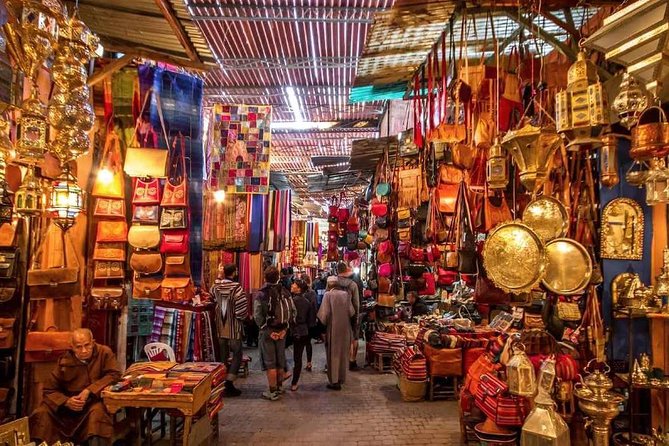
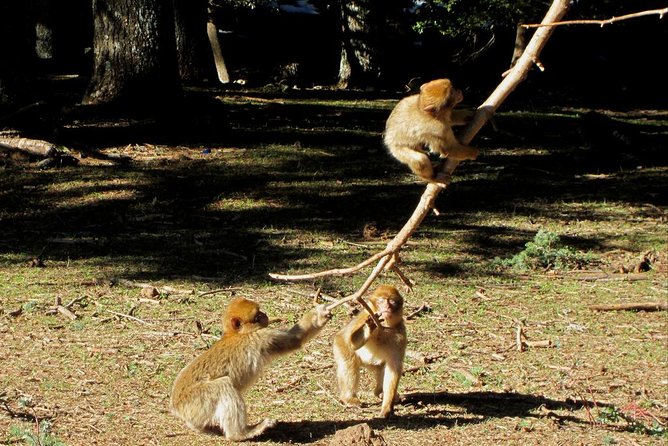
Day five is a long transition day, but the stops break up the drive. You pass through the cedar forests around Azrou and Ifrane, with the possibility of seeing monkeys. Midelt offers a mountain pause, and the Ziz Valley brings a sharp change in scenery, with fertile palms and dates.
Near Erfoud, the route introduces the area’s fossil trade. The tour may include a workshop where you can handle and work with fossils, including trilobites, but the supplied details do not state a separate cost or guaranteed schedule. Ask your guide before counting on it as a set activity.
You finish in Merzouga, where Moroccan tea welcomes you before the night near the dunes. Accommodation is listed as a four-star hotel or riad for this first desert stay, followed by a luxury tent on the main desert night. This overnight arrangement gives you a little comfort before the more memorable camp experience.
Camels, Gnawa music, and a night under desert stars
Merzouga receives a full day, which is important. Rather than arriving late, taking a short camel ride, and leaving at dawn, you have time for several possible activities. Options listed include Moroccan cooking workshops, contact with nomadic communities, desert sports, and quad-bike challenges.
Rissani is a strong stop for anyone who wants a less polished market experience. It was once an important caravan trading center, and the souk includes a donkey market along with food and traditional goods. It may feel rougher and more local than the famous shopping lanes of Marrakech, which is precisely its appeal.
Khamlia adds music and cultural history. The village is associated with Gnawa people whose ancestors were brought from Sudan as slaves. You can hear their music and learn about life in the desert. The stop is described as lasting about four hours, so it is not a quick photo break.
Later, you ride a camel for roughly an hour toward the dunes and desert oases. The sunset is the day’s natural high point. You then spend the night in a luxury tent beneath the stars. Bring a warm layer even for a hot-season visit, since desert temperatures can fall after dark.
Todra Gorge and the Dades Valley
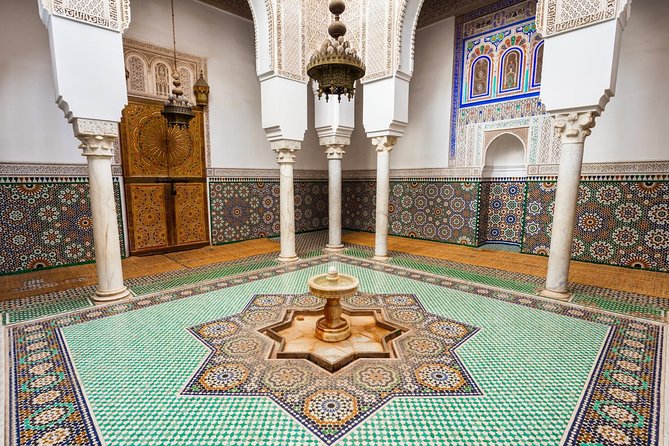
After the desert night, day seven changes the mood completely. The Todra Gorge has tall rock walls, at points reaching about 600 meters, with a very narrow passage between them. A two-hour stop lets you walk through the gorge and take in the scale without turning the day into a demanding hike.
The night is in or near Boumalne Dades, in the Dades Valley. This is a quieter section of the route, with green farmland and birds after the dry desert. It also gives you a needed pause before another day of kasbahs and mountain roads.
The itinerary moves quickly across this part of Morocco. You should enjoy the views from the vehicle as well as the scheduled walks, because the route connects several far-flung regions in a short time.
The Thousand Kasbahs route and Ait Benhaddou
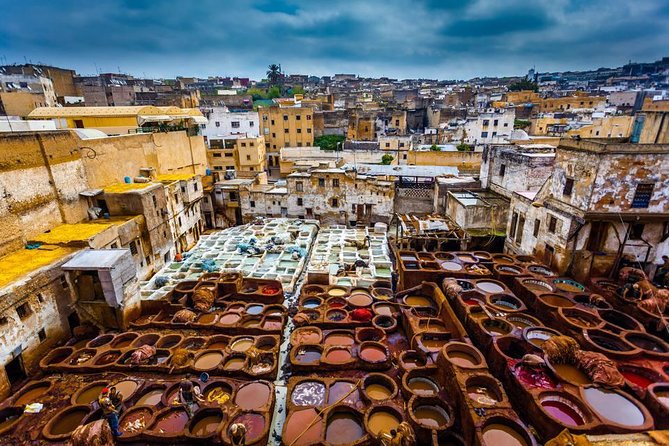
Day eight follows the route associated with a thousand kasbahs, passing through Skoura and El Kelaa des M’Gouna, known as the City of Roses. Ouarzazate brings a visit to Kasbah Taourirt and the old fortified area, with time to see why the town has long been linked to trade and film production.
Ait Benhaddou is the day’s major sight. The fortified village is a UNESCO World Heritage site and one of Morocco’s most recognizable historic settings. Its position on the old trade route between the Sahara and Marrakech explains the heavy walls and clustered earthen buildings.
The site has also appeared in films such as Gladiator and Game of Thrones. That screen connection may draw you in, but the place is worth seeing even without it. You can walk among the old structures and look across the surrounding terrain from the higher parts of the settlement.
The day ends in Marrakech, with an evening at Jamaa el Fna. Food stalls, tea, music, and performances fill the square, and you can choose your own dinner at local prices. This is one of the tour’s three included dinners only if your schedule places the provided meal here, so confirm which evenings are covered before ordering.
Six hours with Marrakech’s major sights
Day nine is devoted to Marrakech with a city guide. The itinerary includes Bahia Palace, Ben Youssef Medersa, Koutoubia Mosque, Jardin Majorelle, and the Yves Saint Laurent Museum.
Bahia Palace is known for its courtyards, gardens, tilework, and rooms decorated by artisans from Fes. Ben Youssef Medersa offers a different view of Moroccan design, with carved and decorated interiors connected to Islamic education. Admission to both is extra.
Koutoubia Mosque is a useful exterior landmark and one of the city’s most photographed buildings. Non-Muslim visitors should not expect an interior visit, and the listed schedule allows only about 20 minutes here.
The Majorelle Garden and Yves Saint Laurent Museum need more planning. Two hours are set aside for the garden and 40 minutes for the museum, with separate admission charges. If you want both, check opening times and ticket arrangements before the day begins.
The final morning leaves time for souk shopping, and a hot-air balloon ride is listed as an optional possibility. It is not included, so ask for the current price and departure details before making plans around it.
What the $2,954.46 price includes
At $2,954.46 per person, this is not a budget tour. The value comes from what is bundled into a 10-day private journey: airport pickup, private air-conditioned transport, hotels or riads, a luxury desert tent, nine breakfasts, three dinners, a camel ride, and guiding across a very broad route.
The private vehicle is especially valuable because Morocco’s distances add up. You avoid arranging separate trains, transfers, desert transport, and intercity rides yourself. You also have more control over stops and meal choices.
Still, the price does not cover flights or entrance tickets. It also leaves most lunches and several dinners to you. Add those costs before comparing this with a self-planned trip or a group departure.
The tour is recommended by 99 percent of its booking audience and carries a five-star rating from 279 reviews. Hassan and Ahmed received specific praise for friendliness, good guiding, and a useful balance of structure and free time. That is the kind of service that can make a complicated route feel manageable, but guide assignments may vary.
Who should book this Morocco route?
I would choose this trip if you want to see Morocco’s main regions in one organized journey and prefer a private vehicle to public transport. It suits couples, families, and small groups that want shared time without joining strangers.
It is also a good fit if the Sahara is essential but you do not want a desert-only trip. You get Roman ruins, imperial cities, mountain towns, markets, kasbahs, and Marrakech in one circuit.
I would hesitate if you prefer slow travel. The route covers a great deal of ground, and some days are built around driving between distant stops. I would also hesitate if you want every meal and attraction prepaid, since those costs remain partly yours.
Cancellation is free up to 24 hours before the start time. Bad weather or failure to reach the required minimum number of participants can lead to a new date, another experience, or a full refund.
FAQ
How long is the private Morocco tour?
The tour lasts approximately 10 days, from arrival in Casablanca to departure from Marrakech.
Where does the tour begin and end?
It begins with pickup at Casablanca airport and ends with airport transfer from Marrakech. The starting and ending arrangements can be adjusted.
Is transportation included?
Yes. Private transportation in an air-conditioned vehicle is included.
What accommodation is provided?
The package includes four-star hotels or riads and a luxury tent at the desert camp.
Are meals included?
Nine breakfasts and three dinners are included. Flights, most other meals, and entrance fees are not included.
Is a camel ride part of the tour?
Yes. A camel ride of about one hour is included in the Merzouga desert section.
Are monument and museum tickets included?
No. Entrance fees are extra for places such as Hassan II Mosque, Volubilis, Fes attractions, Bahia Palace, Ben Youssef Medersa, Jardin Majorelle, and the Yves Saint Laurent Museum.
Can I cancel for a full refund?
Yes, if you cancel at least 24 hours before the experience start time. Changes or cancellations made less than 24 hours in advance are not accepted for a refund.
New desert trips around Morocco
- Sunset in Agafay: Dinner, Camel, Quad-Book Adventure with Viator★ 5.0 · 8 reviews
- Quad Biking Agafay desert★ 5.0 · 20 reviews
- Quad Ride In The Agafay Desert★ 5.0 · 39 reviews
- Sandboarding guided experience from Agadir&Taghazout★ 5.0 · 39 reviews
- Half-day Quad excursions in the Agafay desert★ 5.0 · 9 reviews
- Agadir Jeep Safari Desert Day Trip including Lunch & camel ride★ 5.0 · 24 reviews
- Sunset Camel Ride in Agadir with Dinner in Habitant House★ 5.0 · 28 reviews
- 2 Hours Private Camel Ride in Agadir★ 5.0 · 48 reviews
Casablanca Desert Safaris, compared.
Marrakech Day Trip with Camel Ride from Casablanca
Read our review →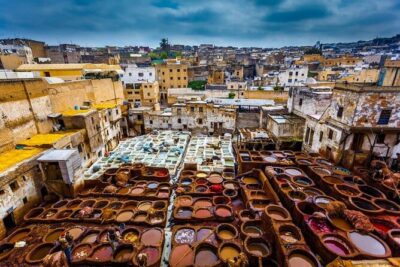
10 Day Desert Tour From Casablanca via the Imperial Cities
Read our review →
Other lists this trip appears in