
Review · MOROCCO
2-Day Sahara to Zagora & Ouarazazate from Marrakech
The best part of this trip is the quick change of scenery: Marrakech gives way to High Atlas peaks, old Berber villages, date palms, and finally a camel ride into Zagora’s dunes. You get a lot in two days, including Aït Ben Haddou, sunset, a night in camp, and sunrise.
I like the simple rhythm of the desert stay, especially the sunset and sunrise camel rides. I also like the price, $88 per person, which covers transport, dinner, breakfast, camp lodging, and both rides. The catch is the road time. This is a long bus journey with an early start, and Zagora does not offer the towering dunes shown in many classic Sahara photographs.
Key points to know before booking
- Aït Ben Haddou is the cultural highlight: Walk through one of Morocco’s best-known fortified villages, though the visit can feel rushed.
- Zagora means accessible desert, not giant dunes: You get sand, camels, and a desert camp, but the dunes are modest.
- The road is the price of admission: The trip crosses the High Atlas and Drâa Valley, but much of the two days is spent in a vehicle.
- Sunrise is worth the early wake-up: The return camel ride gives you a second chance to enjoy the desert at a cooler hour.
- Meals are only partly included: Dinner and breakfast are covered, but you pay for lunch, drinks, and any requested tips.
- A practical choice for a short visit: It suits you if you have only two days and want a first taste of southern Morocco without arranging a longer desert trip.
From Marrakech to the High Atlas at 7:20 am
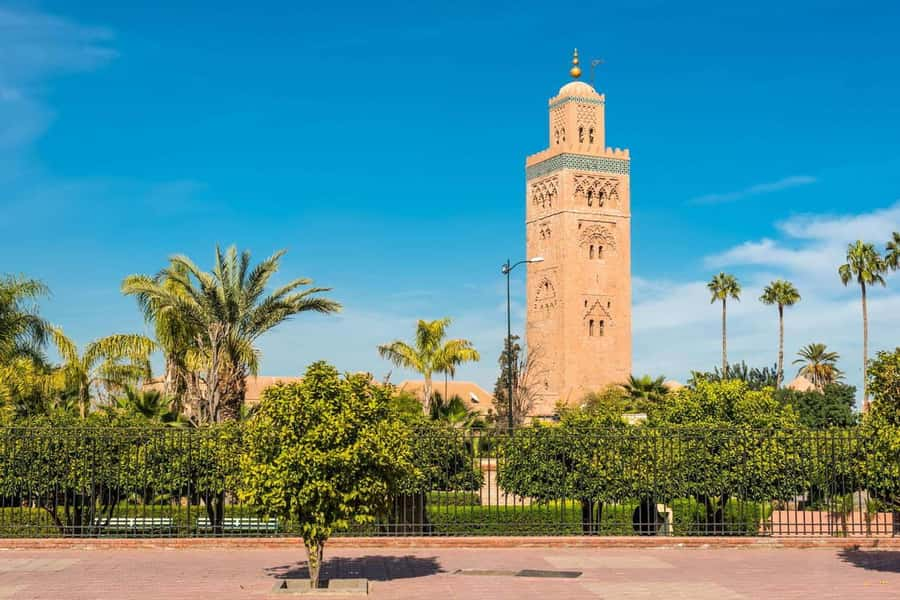
Your day starts early, at about 7:20 am, with pickup from your Marrakech hotel. If you stay in a riad or guesthouse inside the Medina, the minibus cannot usually reach the narrow streets, so you will walk to the nearest accessible meeting point.
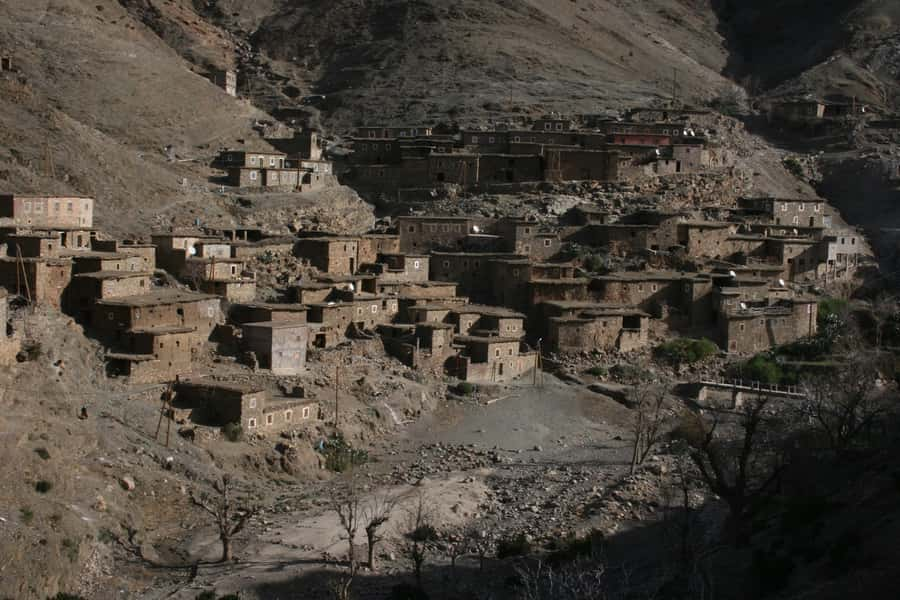
The first major stretch takes you toward the High Atlas Mountains. This is one of the strongest parts of the trip because the road gives you a sharp visual change from Marrakech. Mountain slopes, high passes, and old Berber villages replace the city’s ocher walls.
You stop in the mountains for photographs, a short walk, a stretch, or coffee. That pause matters. The road is long, and a few breaks make the journey easier on your legs.
The air-conditioned minibus or minivan is included, and some departures may have a friendly driver such as Brahim, who received particular praise for careful driving and good music. Still, do not expect a relaxed scenic drive with endless free time. You need to cover a large distance in only two days, so the schedule keeps moving.
Take a small day bag into the vehicle. Keep sunscreen, sunglasses, water, a light layer, and your phone or camera within reach. Your larger bag may be less convenient to access during the stops.
More Multi-Day Desert Tours in Morocco
- From Marrakech: 3-Day Merzouga and Sahara Desert Tour
★ 4.9 · 15,308 reviews - From Marrakech: Merzouga 3-Day Desert Safari with Food
★ 4.7 · 12,232 reviews - 3 Days Desert Tour From Marrakech To Merzouga Dunes & Camel Trek
★ 5.0 · 10,125 reviews
Aït Ben Haddou, Morocco’s famous fortified village
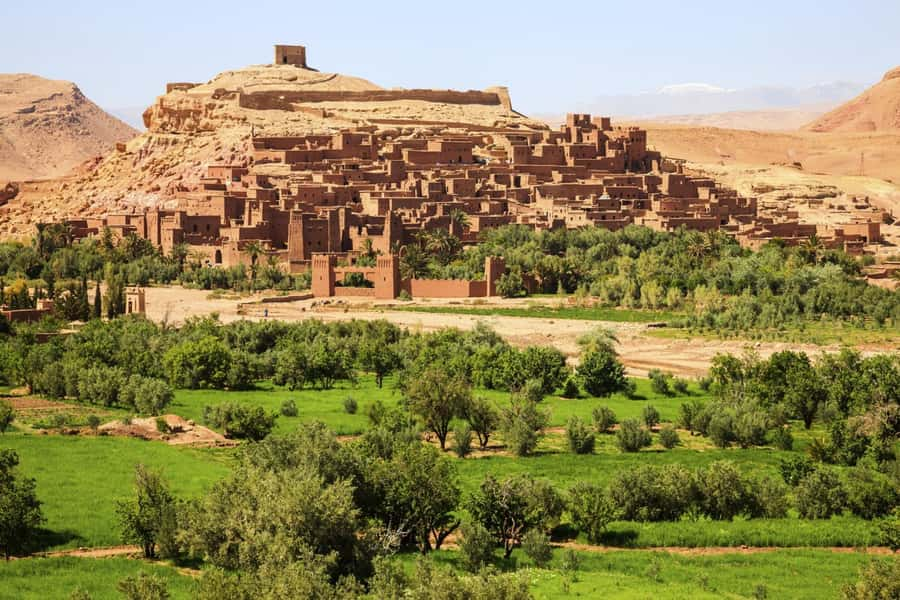
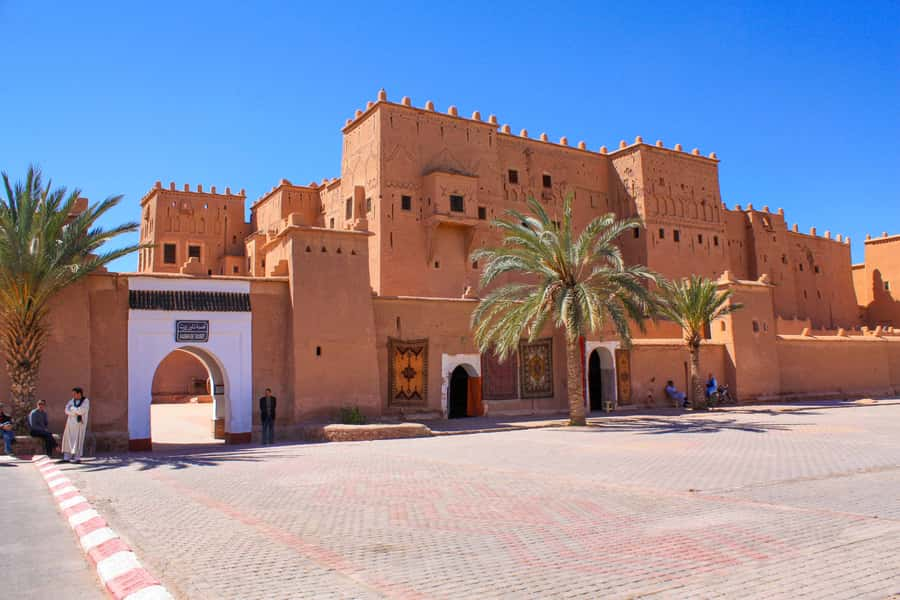
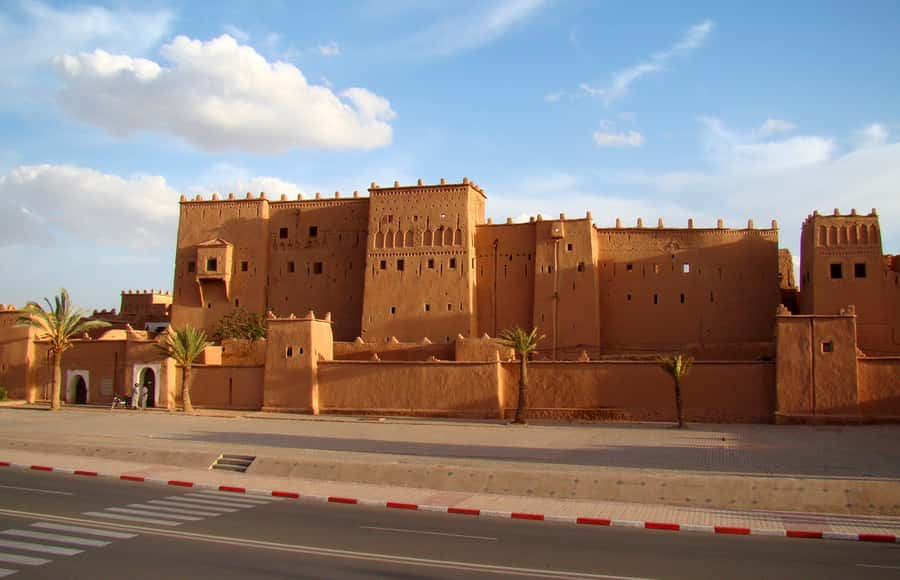
Aït Ben Haddou is the most important historical stop on the route. The UNESCO World Heritage site is a cluster of earthen buildings and defensive walls set along the former caravan routes between the Sahara and Marrakech.
The site is visually striking because of its compact, mud-colored architecture. You walk through narrow passages and see how the fortified settlement rises above the surrounding area. It is also one of Morocco’s best-known kasbah settings, so it may look familiar from film and television.
Your guide gives you an introduction to the site, but the visit is not designed as a long archaeology lesson. The schedule is tight, and one visitor felt the stop moved too quickly to explain as much history as the place deserved. I would treat it as a focused introduction, not a full guided study.
Wear shoes with a good grip. The paths can be uneven, and the visit involves walking uphill in places. Long pants are recommended, both for comfort and for protection from the sun.
Lunch comes after or around the Aït Ben Haddou visit, and it is not included in the tour price. This is one of the main budget points to understand. Several people found the suggested restaurants expensive for the quality, so I would ask about the menu and price before ordering. You may have limited choice because the group needs to stay on schedule.
There can also be shopping stops connected with the route. One visitor paid 230 dirham for a short headscarf near the start of the Aït Ben Haddou visit, then found a longer scarf for 130 dirham at a shop recommended later. The useful lesson is simple: compare prices before buying, especially at a stop where you feel rushed.
Through the Drâa Valley toward Zagora
After Aït Ben Haddou, the road continues through the Drâa Valley. This region is known for date palms and stretches of green growth along the river corridor, a welcome contrast to the dry mountain slopes and open desert.
The valley helps explain southern Morocco’s old settlement pattern. Water supports palms and crops, while fortified villages sit nearby. You are not just crossing empty ground. You are seeing how people built communities around a narrow, fertile strip in a dry part of the country.
This section is scenic, but it also adds to the long travel day. You may enjoy the changing views, music, and conversation in the vehicle, or you may simply want to sleep. Both are sensible choices. The trip leaves Marrakech early and reaches Zagora after visiting the mountains and Aït Ben Haddou, so fatigue is part of the experience.
The route is a good fit for you if the journey itself interests you. If you want the greatest amount of desert time, a longer tour would be more comfortable. A two-day schedule can show you several major sights, but it cannot give each one a leisurely pace.
Camel riding at sunset in Zagora
When you arrive near Zagora, you leave the road for the camel ride to the desert camp. The ride takes place around sunset, when the light softens and the sand takes on warmer colors.
This is the moment that makes the long drive feel worthwhile. You are not simply visiting a desert by vehicle. You are crossing part of it at a slow pace, watching the ground and sky change around you.
Keep your expectations realistic. Zagora is the practical desert option from Marrakech, but it is not the area known for Morocco’s highest, broadest dunes. The sand formations are smaller than the dramatic photographs often used to sell Sahara trips. You still get the key desert elements, including camels, open sand, sunset, and a camp night, but the scale is more modest.
Camel riding can be tiring, especially after a full day in a vehicle. Long pants help, and comfortable shoes are useful before and after the ride. People with limited mobility and pregnant women should not book this activity. The tour is also not recommended for anyone who needs accessible transport or has difficulty getting on and off a camel.
Same sand, a different ride:
- Marrakech: Agafay Desert Sunset, Camel Ride, and Dinner Show
★ 4.6 · 35,119 reviews - Marrakech: Agafay Desert Quad & Camel Rides with Dinner Show
★ 4.8 · 27,382 reviews - Marrakech: Agafay Desert Quad Biking Tour with Dinner-Show
★ 4.8 · 16,569 reviews - Marrakech: Agafay Desert Quad & Camel Rides with Dinner Show
★ 4.9 · 10,771 reviews
A Berber camp, dinner, and music after dark
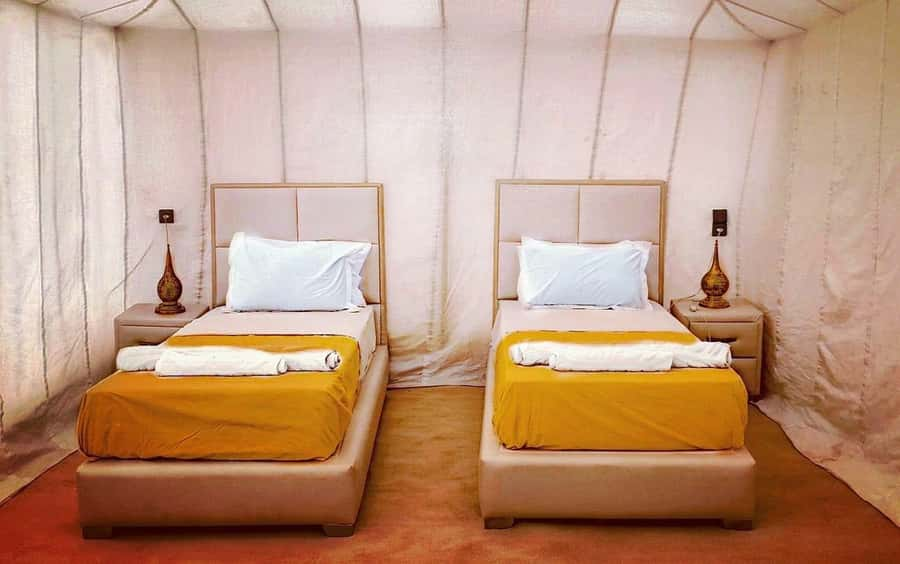
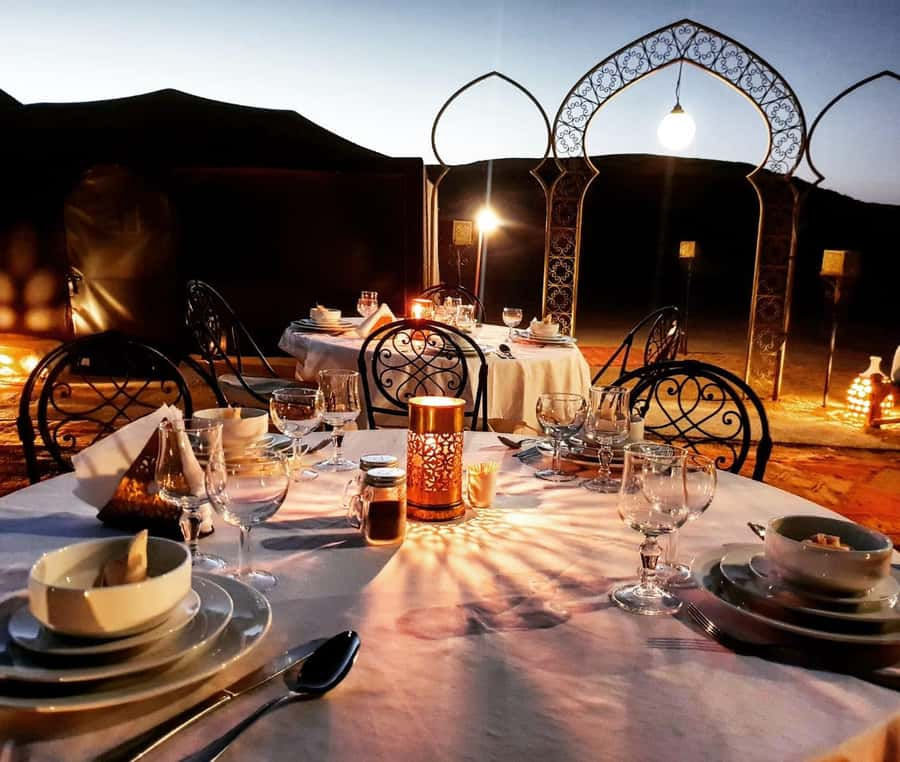
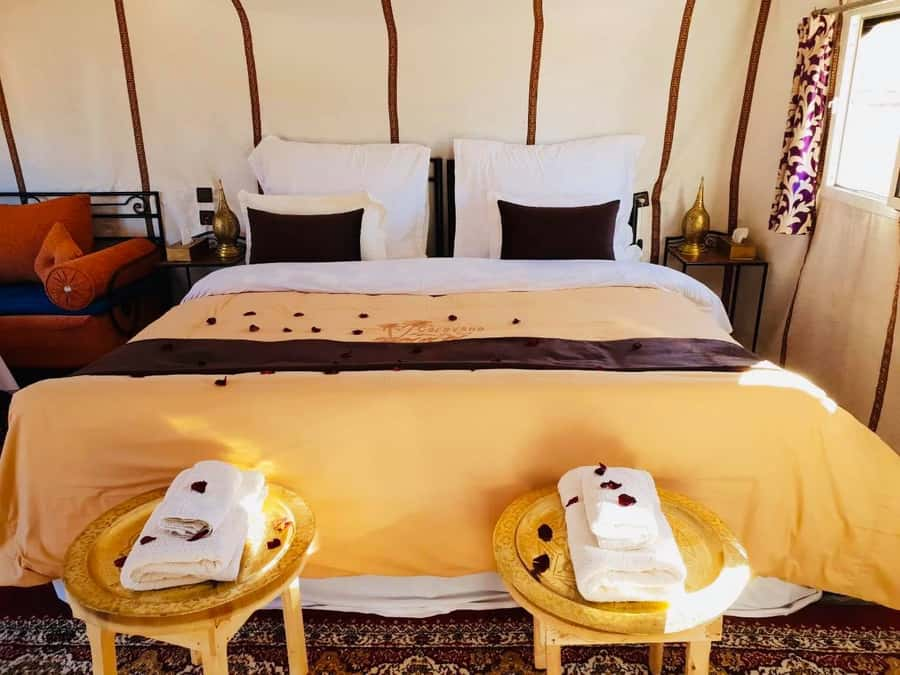
The overnight camp is the emotional center of the trip. You sleep in a Berber desert camp among the dunes, with dinner and breakfast included.
Camp standards can vary. One honeymooning couple described a particularly comfortable setup with clean, luxurious tents and private bathrooms, while the general booking information simply promises a night in a bivouac. That means you should avoid assuming the same level of comfort on every departure. At a minimum, plan for a basic desert camp rather than a full hotel.
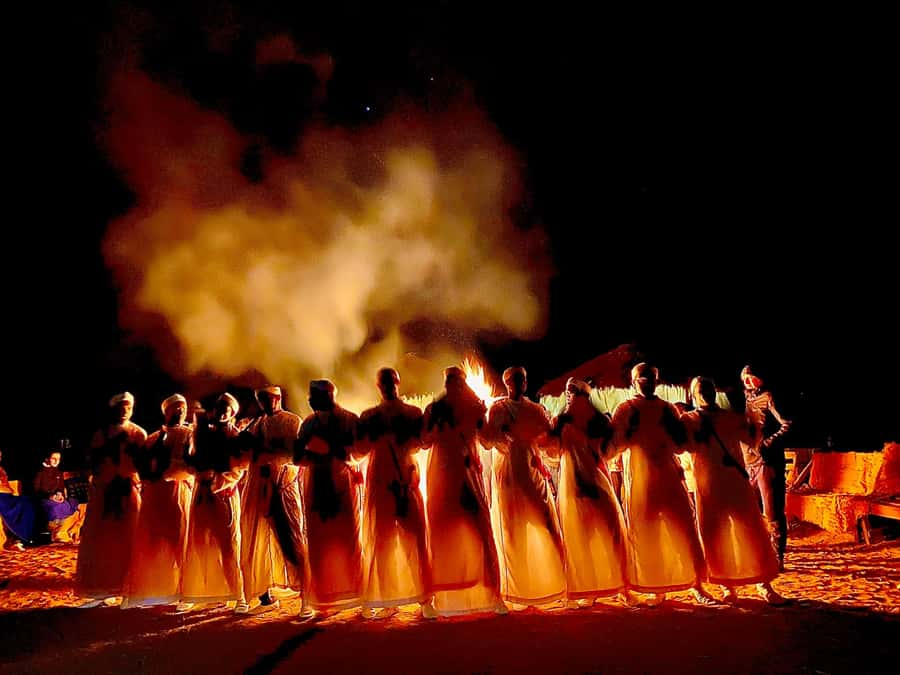
The evening includes traditional music and time around the camp. Some people join in with simple rhythms and dancing, while others sit back and enjoy the quiet. This is a social part of the trip, so solo visitors can find it easy to meet people during dinner and the evening program.
Dinner is included, and several people praised the food. Breakfast follows in the morning. Lunch is not included on either day, and drinks are also your responsibility. Bring enough cash for those costs, along with tips. Tips were requested at points along the route, and this surprised some people who had not budgeted for them.
The camp can feel cold after sunset and warm once the sun is up. The information asks you to bring sunscreen, sunglasses, comfortable shoes, and long pants. I would also carry a light jacket or warm layer, since temperatures in a desert camp can change sharply after dark. That is practical packing advice, not a promise about the camp temperature.
Sunrise, breakfast, and the return camel ride
The second day begins early so you can watch the sunrise. You will be woken by the camp hosts, eat breakfast, and take a second camel ride back to meet the driver.
The sunrise ride is not just a repeat of the previous evening. The light is cooler, the air is often calmer, and you see the camp and dunes from a different angle. It also gives you a second chance to enjoy the camels if the first ride felt rushed.
After breakfast and the ride, the long return to Marrakech begins. You pass back through the High Atlas, with another chance to watch the mountains and villages from the road.
The return journey can be the hardest part. One person reported a change from a smaller van to a larger bus near Ouarzazate, where seating and air-conditioning became uncomfortable. Vehicle arrangements can vary, so do not assume you will have the same van and driver for every section. Keep water with you and save your most comfortable clothes for the ride home.
How much value do you get for $88?
At $88 per person, this is a strong price for the number of major elements included. You receive air-conditioned transport, a night at the camp, dinner, breakfast, two camel rides, local taxes, and a guide who can speak English, French, Arabic, or Spanish.
The value depends on what you count as the main attraction. If you want a low-cost introduction to the desert, the package is appealing. You get the High Atlas, Aït Ben Haddou, the Drâa Valley, a camel ride at sunset, a camp night, and sunrise without arranging separate transport and lodging.
The price looks less generous if you judge it by time spent at each sight. Much of the tour is road travel, and both lunches and drinks cost extra. Suggested restaurants may charge more than you expect, and tips should be part of your budget rather than an afterthought.
I would also compare the trip with a longer desert itinerary if you have extra time. The two-day version is built for access and speed. A longer tour would likely allow a slower pace, but this shorter trip makes sense for a first visit when your schedule is limited.
What to pack and how to prepare
Pack for walking, sitting, sun, and temperature changes. Comfortable shoes, sunglasses, sunscreen, and long pants are specifically recommended.
A small practical packing list:
- A water bottle and cash for lunch, drinks, and tips
- A warm layer for the desert evening
- A phone charger or power bank
- A small overnight bag with toiletries
- A scarf or hat for sun and dust
- Any medication you need during the long road days
Pets are not allowed. The activity is not suitable for pregnant women or people with mobility impairments. You should also be comfortable with early mornings, long vehicle stretches, uneven paths, and mounting a camel.
Cancellation is flexible up to 24 hours before departure for a full refund, and you can reserve now and pay later. Pickup is available from Marrakech hotels, with Medina visitors meeting at a nearby accessible point.
Who should book this two-day desert trip?
I would recommend it to you if you have limited time in Marrakech and want a broad taste of southern Morocco. It combines famous architecture, mountain views, a palm-filled valley, a camel ride, and a night under desert skies.
It also suits solo visitors and people who enjoy meeting others during a shared road adventure. The guides speak several languages, and drivers such as Brahim have helped make the long hours more pleasant with friendly service and music.
I would hesitate if your main goal is to see enormous Saharan dunes. Zagora provides a desert setting, but the dunes are more restrained than the images often used in brochures. I would also think twice if you dislike long bus rides, fixed meal stops, or early starts.
The best way to view this trip is as a fast sampler of southern Morocco, not a slow desert retreat. Its strongest moments are the sunset, camp evening, sunrise, and Aït Ben Haddou. Its weak point is the amount of time spent getting between them.
FAQ
How long does the tour last?
The tour lasts two days, with an early start from Marrakech at about 7:20 am on the first day.
What places do you visit?
The route includes the High Atlas Mountains, Aït Ben Haddou, the Drâa Valley, Ouarzazate, and Zagora.
Is Aït Ben Haddou included?
Yes. The tour includes a visit to Aït Ben Haddou Kasbah, a UNESCO World Heritage site.
Are camel rides included?
Yes. You receive a camel ride at sunset on the first day and another at sunrise on the second day.
Is accommodation included?
Yes. The package includes one night in a desert bivouac among the Zagora dunes.
Are meals included?
Dinner and breakfast are included. Lunch and drinks are not included and must be paid for separately.
What languages can the guide speak?
The available guide languages are English, French, Arabic, and Spanish.
Where does pickup take place in Marrakech?
Pickup is available from hotels. If you stay in a riad or guesthouse in the Medina, you will meet the minibus at the nearest accessible location.
Is the tour suitable for people with limited mobility?
No. The activity is not recommended for people with limited mobility or mobility impairments, and it is not suitable for pregnant women.
Should you book the Zagora trip?
Book it if you want an affordable first taste of the Moroccan desert and accept that the road journey is a major part of the experience. The combination of Aït Ben Haddou, the Drâa Valley, two camel rides, and a camp night gives you a lot for $88.
Skip it if you want towering dunes, long free time at each stop, or a quiet luxury desert break. For everyone else, this is a lively, demanding, and worthwhile two-day introduction to the road south from Marrakech.
New desert trips around Morocco
- Sunset in Agafay: Dinner, Camel, Quad-Book Adventure with Viator★ 5.0 · 8 reviews
- Quad Biking Agafay desert★ 5.0 · 20 reviews
- Quad Ride In The Agafay Desert★ 5.0 · 39 reviews
- Sandboarding guided experience from Agadir&Taghazout★ 5.0 · 39 reviews
- Half-day Quad excursions in the Agafay desert★ 5.0 · 9 reviews
- Agadir Jeep Safari Desert Day Trip including Lunch & camel ride★ 5.0 · 24 reviews
- Sunset Camel Ride in Agadir with Dinner in Habitant House★ 5.0 · 28 reviews
- 2 Hours Private Camel Ride in Agadir★ 5.0 · 48 reviews
Multi-Day Desert Tours, compared.
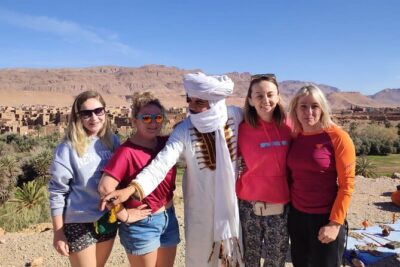
3 Days Desert Tour From Marrakech To Merzouga Dunes & Camel Trek
Read our review →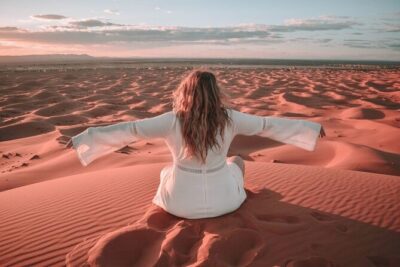
3-Day Marrakech to Merzouga Desert Tour: Camel Rides & Overnights
Read our review →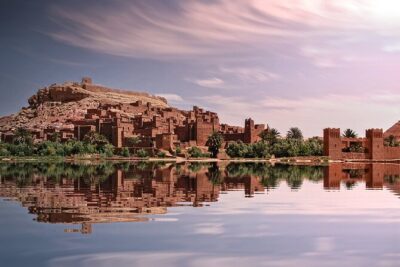
3-Day Marrakech to Fes Sahara Desert Tour via Merzouga
Read our review →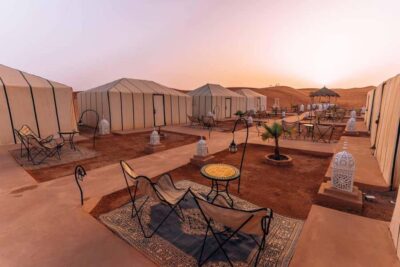
3-Day Merzouga Desert Experience Camel & Meals
Read our review →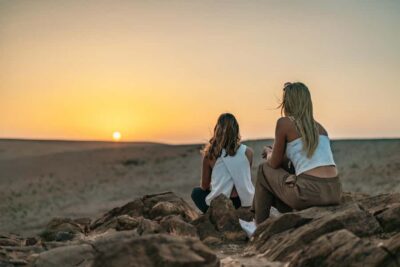
Agafay Desert Magical Overnight with Dinner Show
Read our review →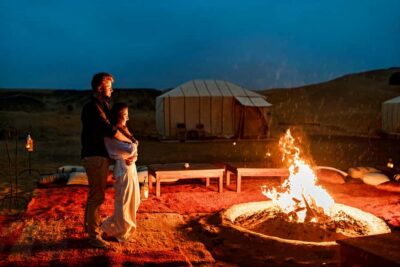
Other lists this trip appears in